Association of Old Crows (AOC)

Upcoming Association of Old Crows (AOC) Events
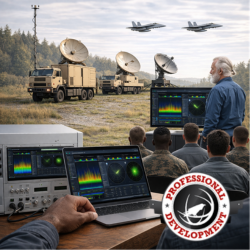
This webinar will explore the effects of the modern electronic battlefield on the performance or non-performance of manned and unmanned air vehicles, and the methods used to mitigate the effects of electromagnetics on their operation.
- CEMA 3-4 Conference presentation, “Multifunctional Composite for Electromagnetic Shielding”
- AHS Specialists Meeting, “Multi-Functional Structural Composite with Integrated Electromagnetic Shielding”.
- Harry R. Luzetsky. “Multifunctional Structural Composite with Integrated Electromagnetic Shielding”. Aircraft Survivability Journal 19 Spring Issue 2019. Pages 9-17.
- Harry R. Luzetsky. “Advanced Composite Solutions for Dynamic Structural Applications.” DSIAC Journal Volume 3 Number 3 Summer 2016. Pages 24-30.
- Harry R. Luzetsky, Martha Klein, and Graham Ostrander. “Multifunctional Structural Composite with Integrated Electromagnetic Shielding.” May 08, 2017 (Presented at AHS Forum 73)
- Robert A. Haynes, Harry R. Luzetsky and Ellen M. Phifer, “Shielding Multifunctional Composites for Aircraft Structures”, AIAA SCITECH Forum 6-10 January 2025.
- Harry R. Luzetsky, “UASs in the Modern Electronic Battlefield”, Volume 9 Number 1,
- Harry R. Luzetsky,” Advanced Composite Solutions for Dynamic Structural Applications” DSIAC Journal Volume 3 Number 3 Sumer 2016, pp23-30.

AI is revolutionizing every aspect of our lives from entertainment, medicine, and sports to global supply chains and national security, triggering a new era characterized by rapid technological breakthroughs. This multifaceted era extends beyond AI algorithms alone, encompassing advances in semiconductors and emerging technologies such as digital twins, highlighting that AI’s influence relies on the convergence of a complex ecosystem of interdependent technologies rather than isolated innovations. Drawing on recent success stories and real-world applications, this presentation highlights how AI is already improving decision-making, creating breakthroughs, enhancing operational efficiency, and enabling new forms of innovation across sectors. As we look ahead, we discuss how 2026 is emerging as a pivotal year in which AI evolves from a powerful instrument into a collaborative partner, transforming how we work, innovate, and solve problems. The presentation concludes with a realistic glimpse into the future of AI-driven innovation and its impact.

Missiles provide the essential accuracy and standoff range capabilities that are required in modern warfare. Technologies for missiles are rapidly emerging, resulting in the frequent introduction of new missile systems. The capability to meet the requirements for missile survivability is especially important for long range missiles. This presentation provides an overview of the broad range of alternatives in satisfying missile requirements for survivability. The methods presented are generally physics-based, to provide insight into the primary driving parameters. Typical values of missile parameters and the characteristics of current operational missiles are discussed, as well as the enabling subsystems and technologies for missiles and the current/projected state-of-the-art. Videos are presented to illustrate missile development tests and facilities and missile performance.
APPROACHES FOR MISSILE SURVIVABILITY ADDRESSED IN THIS PRESENTATION
- Speed
- Altitude
- Maneuvers
- Low observable airframe
- CCM seeker
- Inertial navigation system
- Pseudolites
- Data link
- EMP hardening
- Threat avoidance/mission planning

Course Dates: June 8, 2026 | 11:00 AM – 2:00 PM
Course Location: Virtual
Course Length: 3 hours total delivered across one course
Continuing Education Units (CEUs): 3
Description: This course provides an introduction to space warfare theory, policy, doctrine, strategies & tactics at an overview perspective. This lecture is not about technology, but discusses the overall principles dealing with outer space conflicts. Outlines past attacks on satellites, including during the Ukrainian Conflict, and some of the subsequent political ramifications. This lecture then concludes with possible future attacks from space that would cause the complete re-alignment of world powers.
Who Should Attend: Anyone with an interest in military operations, strategic affairs, government policy and the consequences of military conflicts. Technical expertise in this critical mission area is not required to understand the foundational principles of space warfare.
Questions related to the course and/or its content can be directed to [email protected].
*Course Pricing
Agenda
AOC Members – $275
Government/Military – $275
Non-Members – $490
Questions related to registration can be directed to Samantha Kim, Professional Development Coordinator, at [email protected].
- About the Presenter
- Past History of Space Warfare
- Basic Principles of Fighting Space Wars
- Space War Over Ukraine in 2014
- Lessons Learned From 2014 Space War
- Space War Over Ukraine in 2022-26 Updates
- Open to Questions
Instructor
Paul Szymanski has over 50 years’ experience in space war policy, doctrine strategy, simulations, surveillance, survivability, threat assessment, long-range strategic planning, & command and control. He has published/lectured over 200 times in Aviation Week, the United States, Canada, Britain, Scotland, Netherlands, Denmark, Belgium, France, Germany, Spain, Italy, Greece, Turkey, Poland, Estonia, Ukraine, India, Cambodia, Taiwan, Australia, New Zealand, Cyprus, Malaysia, and Japan. He has helped the United States fight space wars over this time period (11 space wars and "incidents") and participated in 12 different space weapons programs and 5 different satellite inspector programs. He previously possessed 86 different security clearances in deeply covert space operations, but these all timed out over a decade ago when he retired. Many think he is the top world expert on this subject and the first original space mercenary, much like Bobs Fett, since he has helped 24 allied countries around the world fight space wars. Since he skipped both his senior years of high school and college, and graduated with three college degrees at the age of 22, and soon began working at the Pentagon for the Secretary of the Air Force, he was always the youngest person in the room on these sensitive programs for many years. Subsequently, at age 74, he is now one of the last of the original space warfighters from the 1970’s-1980’s.

The application of artificial intelligence (AI) represents the next major advancement in electronic warfare (EW). With the field of AI, as well as EW, constantly evolving, it is critical to form a baseline understanding of the impact of cognitive EW (CEW). This session seeks to first provide a framework for CEW test and evaluation (T&E) planning and production to prepare the T&E and supporting modeling & simulation, academic, and intelligence communities for CEW. Next, an evaluation of Human-Autonomous teams (HATs), or humans and AI with agency working together will be evaluated. This session will cover a diverse set of topics to include the Superteams impact on CEW, including explorations of current AI and machine learning (ML) research within EW, investigation into possible test methodologies for neural networks, HATs, Superteams, and AI-enabled systems, and considerations for AI risk and ethics assessments within T&E. Conclusions were reached through academic, industry, and government analysis, expert interviews with existing EW laboratories and test facilities, and collaboration with AI, HATs, and Superteams experts to determine the capacity for CEW, demonstrations of CEW concepts in hardware-in-the-loop (HWIL) modeling and machine learning operations (MLOps) pipelines, and assessment of electronic attack (EA) research through physical execution of principles. The rapidly changing field of AI coupled with the nuance of EW functions presents sophisticated problems only able to be tackled through community collaborative efforts.

Course Dates: June 22, 2026 | 11:00 AM – 1:00 PM
Course Location: Virtual
Course Length: 2 hours total delivered across one course
Continuing Education Units (CEUs): 2
Description: This course discusses 100 different unclassified techniques invented by the author to attack and neutralize satellites/space systems without generating any subsequent debris that might damage other satellite systems. Includes many cyber attack means, spoofing, ground controller attacks, clever space mines, attacks on the internal components of the satellite bus, combined arms attacks, hidden attacks, and attacks employing new and unique technologies. This lecture also summarizes other, debris-causing, attacks on satellites for completeness sake.
Who Should Attend: Anyone with an interest in military space operations, covert operations, and unacknowledged “shadow wars” in space. Technical expertise in this critical mission area is not required to understand the principles of space attacks discussed in this lecture.
Questions related to the course and/or its content can be directed to [email protected].
Registration
*Course Pricing
Agenda
AOC Members – $190
Government/Military – $190
Non-Members – $405
Questions related to registration can be directed to Samantha Kim, Professional Development Coordinator, at [email protected].
- About the Presenter
- Potential Space Threats
- Unique Characteristics of Space Systems
- Foundations of Space Warfare
- Top Space Power Countries Around the World
- Critical Questions for Assessing Space Attacks
- Details of 100 Means to Attack Space Systems
- Open to Questions
Instructor
Paul Szymanski has over 50 years’ experience in space war policy, doctrine strategy, simulations, surveillance, survivability, threat assessment, long-range strategic planning, & command and control. He has published/lectured over 200 times in Aviation Week, the United States, Canada, Britain, Scotland, Netherlands, Denmark, Belgium, France, Germany, Spain, Italy, Greece, Turkey, Poland, Estonia, Ukraine, India, Cambodia, Taiwan, Australia, New Zealand, Cyprus, Malaysia, and Japan. He has helped the United States fight space wars over this time period (11 space wars and "incidents") and participated in 12 different space weapons programs and 5 different satellite inspector programs. He previously possessed 86 different security clearances in deeply covert space operations, but these all timed out over a decade ago when he retired. Many think he is the top world expert on this subject and the first original space mercenary, much like Bobs Fett, since he has helped 24 allied countries around the world fight space wars. Since he skipped both his senior years of high school and college, and graduated with three college degrees at the age of 22, and soon began working at the Pentagon for the Secretary of the Air Force, he was always the youngest person in the room on these sensitive programs for many years. Subsequently, at age 74, he is now one of the last of the original space warfighters from the 1970’s-1980’s.

Clearance Requirements: SECRET and/or TS//SCI
Please note, all attendees must be US citizens.
Course Dates: June 23-25, 2026
Course Location: Southwest Research Institute (SwRI), 6220 Culebra Road, San Antonio, TX 78238
Description: This course will highlight how artificial intelligence (AI) can be used in electronic warfare (EW). AI enables EW systems to respond more quickly and effectively to battlefield conditions with complex and novel emitters. The course will describe how AI-enabled systems are different from cognitive systems and present the implications of this capability on system performance and test and evaluation requirements. It will briefly introduce AI techniques for electronic support (ES), electronic protect (EP), electronic attack (EA), and electronic battle management (EBM). The course will describe how to design and train a cognitive EW system that can be tested, including operation considerations and the role of humans. It will present how to collect and curate data, model it, and manage it on embedded devices. The course will describe how to evaluate a system that learns how to handle novel environments, including the role of trust and risk, challenges, and methods for learning assurance. The course will conclude with a discussion of projects, tools, and datasets. The course will include three Python programming modules: clustering, classification, and decision-making. The presentation is based on the book by Karen Haigh and Julia Andrusenko: Cognitive Electronic Warfare: An Artificial Intelligence Approach (second edition). This book is optional and not required to attend this course.
SwRI’s cognitive EW engineers will provide technical instruction on the actual implementation of cognitive EW at the end of each day.
Course Objectives
Participants will understand:
- The motivation for using cognitive techniques in EW systems
- Methods to design and build a system
- Methods to manage EW data
- Methods to evaluate a system that learns in mission
Registration Includes
- Three (3)-day classified course, presented by two (2) renowned experts in the EW field
- Lunch each day
- One (1) evening reception on Tuesday, June 23 at the Holiday Inn Riverwalk, 217 N St. Mary's St., San Antonio, TX 78205
Course Pricing
- AOC Members – $1650
- Non-Members – $1800
- Gov/Mil – $1650

Course Dates:
Session 1 | July 21, 2026 | 1 – 5 PM
Session 2 | July 28, 2026 | 1 – 5 PM
Registration
*Course Pricing
Learning Objectives
Course Location: Virtual
Course Length: 8 hours total delivered across two sessions
Continuing Education Units (CEUs): 8
Description: This course introduces the fundamentals of drone warfare, with a focus on counter-UAS (unmanned aerial systems) operations from detection to defeat. It covers how drones have transformed both civilian and military environments, introducing new challenges in security, surveillance, and battlefield dynamics.
The course begins by establishing the foundations of drone technologies, including architecture, communication links, autonomy, and navigation systems. It then examines the evolving threat landscape through real-world examples, highlighting operational implications in both civilian and military contexts.
Building on this foundation, the workshop explores detection techniques across multiple domains, including radio frequency (RF), radar, electro-optical/infrared (EO/IR), and acoustic sensing, emphasizing the importance of multi-sensor fusion. It further introduces countermeasures such as electronic warfare (jamming and spoofing), cyber exploitation, and directed energy systems, including high-power microwave (HPM) and laser weapons.
Finally, the course integrates these elements into a coherent counter-UAS framework through operational scenarios, enabling participants to understand how to design and evaluate layered defense systems in complex environments.
Who Should Attend: This course is intended for professionals involved in electromagnetic warfare, air defense, counter-UAS, and security operations, including military operators, engineers, system architects, researchers, and decision-makers.
It is particularly relevant for those working in EW, SIGINT, radar systems, defense innovation, and infrastructure protection who seek a structured understanding of modern drone threats and countermeasures.
Questions related to the course and/or its content can be directed to [email protected].
AOC Members – $750
Government/Military – $750
Non-Members – $1,000
Questions related to registration can be directed to Samantha Kim, Professional Development Coordinator, at [email protected].
- Outcome 1: The ability to characterize drone threats and understand the technologies, architectures, and vulnerabilities of modern UAS in both civilian and military contexts.
- Outcome 2: The ability to select appropriate detection and counter solutions (including RF, radar, electronic warfare, and directed energy) based on operational constraints.
- Outcome 3: The ability to design and assess layered counter-UAS systems using a structured, end-to-end approach from detection to defeat across the modern real-world scenarios.
Instructor
Dr. Rafael Licursi is the author of Metasurface-Driven Electronic Warfare (Wiley/IEEE Press) and the CEO of Stronghold AI. He is an antenna and radar researcher specializing in electromagnetic warfare (EW), counter-UAS systems, advanced sensing technologies, and cognitive systems.
He earned his PhD in electronics at the Institut Polytechnique de Paris, focusing on reconfigurable metasurfaces and wideband antenna systems. His career spans both operational and technical roles, including service as a military pilot, radar operator, and Electronic Warfare Officer.
Dr. Licursi has also worked as a signal processing engineer, SIGINT researcher, and antenna engineer, giving him a unique end-to-end perspective on modern electromagnetic operations. His work focuses on developing adaptive systems that integrate sensing, AI-driven models, and real-time decision-making in complex environments.

Course Dates: July 28-31, 2026 | 8 AM – 5 PM
Course Location: West Virginia University (WVU) Campus
Course Length: 4 sessions
Description: Held at West Virginia University (WVU), this workshop leverages cutting-edge research, processes, and capabilities while teaching the next generation of engineers and scientists the foundations of Integrated Air and Missile Defense (IAMD) T&E and threat engineering. Partnering with small businesses, the approach not only transitions technology into the broader test and evaluation workforce but also cultivates advanced degree graduates (master’s and PhD) who possess expert-level knowledge of threat asset design strategies, relevant technologies, and threat engineering methods. Once in the workforce, these graduates can guide T&E engineering decision-makers and resource managers in acquiring near- and far-term threat-representative resources – both physical and M&S – in a fiscally responsible manner.
Who Should Attend: The audience should have a technical background in engineering or applied physics associated with one or more of the following areas: weapons, missiles, electromagnetic systems and techniques, machine learning techniques, and engagement level modeling and simulation of complex weapon systems.
Networking: This four-day workshop will be held on the engineering campus of West Virginia University. Specialized VIP tours and general participant tours of campus facilities will be available. Various scheduled breaks, an evening reception, and events throughout the workshop are designed to facilitate collaboration and foster professional connections with attendees, instructors, and leading experts from the DOD and industry.
The goals of this workshop are to:
- Introduce the T&E threat representation development strategy (strategic asset approach).
- Provide a foundational, introductory education on advanced technologies of strategic importance to threat development for T&E.
- Foster networking and collaboration opportunities with experts across the DOD and industry to accelerate development of effective T&E solutions.
Day one focuses on threat asset technical strategy for T&E. On days two and three, the workshop emphasizes a balanced approach developing various synergistic assets – such as test targets, modeling and simulation (M&S) products, simulators, and stimulators – to fulfill the end-to-end T&E needs of DOD systems under test. One key attribute is the rapid integration of evolving threat technologies.
Over four days, the workshop will feature technical briefings and hands-on lab demonstrations with interactive sessions to equip attendees with practical insights, tools, and connections.
Attendee Learning Objectives
Day 1: Threat Engineering T&E Asset Development Strategy
- Learn a novel efficient and effective approach to satisfy future comprehensive DOD T&E threat-representative assets strategy using threat engineering techniques.
- Explore the application of threat engineering to T&E asset development, including a dedicated session on radar cross section (RCS) characterization and requirements.
- Learn how to construct complex threat flight dynamics models affordably and implement them using a test-bed simulation architecture approach.
- Evaluate advanced engineering techniques for generalized modeling of threat missile damage states and assessing range-dependent lethality.
Day 2 Option 1: Electromagnetic Warfare
- Examine the design of RF seeker systems and advanced seeker technologies, including waveforms likely to be encountered.
- Review AI/ML-based radar waveform development and non-cooperative detection and classification methods.
- Understand the use of digital RF memories (DRFMs) within an adversarial C4ISR campaign and the testing of AI/ML-driven capabilities in both adversarial and friendly RF systems.
- Understand the importance of counter-DRFM methods and compare results of different techniques.
Day 3: AI/ML using Physics-Informed Neural Networks (PINNs)
- Learn the fundamentals of AI/ML and PINNs as applied to engineering practices.
- Understand how different engineering analysis techniques can support AI/ML based 6DoF missile design and performance evaluations, including scaled flight testing, CFD/6DoF, CFD and analytical approaches.
- Explore the use of AI/ML, including Physics Informed Neural Networks (PINNs), in both threat engineering and integrated missile defense systems M&S.
Day 4: Interactive Matlab/Simulink Laboratory Sessions
- Introductory practical exercises in a computer lab setting using MATLAB/Simulink.
- Work through complex 6DoF air defense system-missile engagement with AT3MSTB.
- Understand a missile seeker model in SIMULINK and evaluate its performance in a missile – ASCM decoy engagement.
- Use time-frequency and bi-frequency neural network constructs for detection and classification of intercepted threat waveforms.
- Execute a comparison test evaluating adversarial C4ISR against a multifunction RF sensor system.
Registration
Course Pricing
- AOC Member – $1,600
- Gov/Mil – $1,600
- Non-Member – $1,800
- AOC Member – $1,800
- Gov/Mil – $1,800
- Non-Member – $2,000
Early Bird Rates
Rates After June 19, 2026
Questions related to registration can be directed to Samantha Kim, Professional Development Coordinator, at [email protected].
Hotel Recommendations

Course Dates:
Session 1 | August 18, 2026 | 1 – 5 PM
Session 2 | August 25, 2026 | 1 – 5 PM
*Course Pricing
- Outcome 1: The ability to understand the fundamental principles of metasurfaces and their interaction with electromagnetic waves in the context of electromagnetic warfare.
Course Location: Virtual
Course Length: 8 hours total delivered across two sessions
Continuing Education Units (CEUs): 8
Description: This course introduces the use of metasurfaces in defense applications, with a focus on their role in modern electromagnetic warfare (EW), a subject explored further in the book Metasurface-Driven Electronic Warfare. Metasurfaces are artificially engineered structures capable of dynamically controlling electromagnetic waves, enabling new capabilities in transmission, reflection, and absorption.
The course begins with a review of key electromagnetic principles and the evolution from conventional RF systems to reconfigurable, metasurface-enabled architectures. It then explores how metasurfaces can enhance traditional EW functions, including stealth technologies and adaptive antennas, and multifunctional RF systems used in electronic support (ES), electronic attack (EA), and electronic protection (EP).
Building on this foundation, the course also introduces emerging concepts including cognitive and distributed EW, with a particular focus on drone swarms and dynamic spectrum environments. Finally, the course connects these elements into a coherent framework, enabling participants to understand how metasurfaces can be integrated into next-generation EW systems and operational architectures.
Who Should Attend: This course is intended for professionals involved in electromagnetic warfare, signals intelligence, radar systems, and advanced RF technologies, including military operators, engineers, researchers, and decision-makers.
It is particularly relevant for those working in EW, SIGINT, antenna design, and defense innovation who seek to understand emerging technologies and their application to next-generation electromagnetic operations.
Questions related to the course and/or its content can be directed to [email protected].
Registration
AOC Members – $750
Government/Military – $750
Non-Members – $1,000
Questions related to registration can be directed to Samantha Kim, Professional Development Coordinator, at [email protected].
Learning Objectives
- Outcome 2: The ability to evaluate the application of metasurfaces across electromagnetic warfare functions, including stealth, sensing (ES), attack (EA), and protection (EP).
- Outcome 3: The ability to assess how metasurface technologies can be integrated into advanced and distributed EW systems, including cognitive and swarm-based architectures.
Instructor
Dr. Rafael Licursi is the author of Metasurface-Driven Electronic Warfare (Wiley/IEEE Press) and the CEO of Stronghold AI. He is an antenna and radar researcher specializing in electromagnetic warfare (EW), counter-UAS systems, advanced sensing technologies, and cognitive systems.
He earned his PhD in electronics at the Institut Polytechnique de Paris, focusing on reconfigurable metasurfaces and wideband antenna systems. His career spans both operational and technical roles, including service as a military pilot, radar operator, and Electronic Warfare Officer.
Dr. Licursi has also worked as a signal processing engineer, SIGINT researcher, and antenna engineer, giving him a unique end-to-end perspective on modern electromagnetic operations. His work focuses on developing adaptive systems that integrate sensing, AI-driven models, and real-time decision-making in complex environments.

Course Dates: September 14-16, 2026 | 8:30 AM – 4:00 PM
Course Location: John Hopkins University
Kossiakoff Conference Center
Classrooms 7-8
11100 Johns Hopkins Road
Laurel, Maryland 20723
Course Length: 20 hours total delivered across 3 sessions
Continuing Education Units (CEUs): 20
Description: This course provides a comprehensive introduction to the principles of electronic warfare (EW), covering the foundational concepts required to understand modern EW systems and operations. Topics include EW fundamentals, RF mathematics, antennas and receivers, emitter detection and geolocation, radar systems, and electronic attack and protection techniques. The course combines theory with practical examples to build intuition and analytical skills applicable to real-world EW problems.
Who Should Attend: Engineers, analysts, program managers, and military personnel seeking a foundational understanding of electronic warfare. Ideal for those new to EW or professionals transitioning into EW-related roles.
Registration Notice: This course is limited to 50 participants. After the first 50 registrations, a waitlist will automatically be used. If a spot opens, individuals on the waitlist will be contacted in order.
Notice: Association of Old Crows has leased or rented facilities from the Johns Hopkins University Applied Physics Laboratory (APL). However, Association of Old Crows and any programs operated by Association of Old Crows are not related to or affiliated with APL or the Johns Hopkins University in any way.
Agenda:
- EW Principles & Overview
- Math for Electronic Warfare
- Antennas, Receivers & Signal Processing
- Search and Emitter Location
- Radar Characteristics
- Electronic Attack Concepts & Calculations
- Jamming Techniques and Electronic Protection
- Chaff, Decoys, and IR/EO Threats & Countermeasures
Learning Objectives
- Outcome 1: An understanding of the core principles of electronic warfare, including RF fundamentals, radar basics, and the roles of electronic support, attack, and protection.
- Outcome 2: Hands-on familiarity with solving introductory EW problems using MATLAB/Octave, enabling students to perform calculations, visualize RF behavior, and build intuition through computational analysis.
- Outcome 3: The ability to apply foundational EW concepts to real-world scenarios, using analytical and computational tools to better understand system performance and tradeoffs.
Required Materials
Please bring a laptop, and have either MATLAB (https://www.mathworks.com/) or Octave (https://www.octave.org/) installed on your computer. The Instructor, Chuck Quintero, will give out a Google drive link to download the MATLAB/Octave simulations and lecture notes.
Registration
Course Pricing
- AOC Member – $1,400
- Gov/Mil – $1,400
- Non-Member – $1,600
Hotel Recommendations
AOC does not have a hotel block for this Course. However, we do recommend the following hotel as it is within walking distance to the venue.
Homewood Suites by Hilton Columbia/Laurel
7531 Montpelier Road, Laurel, MD
Rates from $151+
Instructor
Chuck Quintero is an engineer at the Johns Hopkins University Applied Physics Laboratory specializing in RF seekers and remote sensing in electronically competitive environments. He has 40 years of experience at RCA Missile & Surface Radar, Martin Marietta, General Electric, Lockheed Martin, ITT, L3 Harris, Northrop Grumman, Leidos, SRI International, and APL in electronic warfare systems, signal processing, and applied RF engineering, supporting national security missions.
Modern Electromagnetic Warfare Operations (EMO) relies on mission datasets that predict and catalogue emission signatures to support emitter Identity (specific source) and Recognition (type or category). These datasets feed the Recognised Electromagnetic Picture (REMP) and the Common Operating Picture (COP). However, real-world conditions often diverge from predictions: variations in equipment, probabilistic signal observations, and incomplete TECHINT analysis can introduce uncertainty.
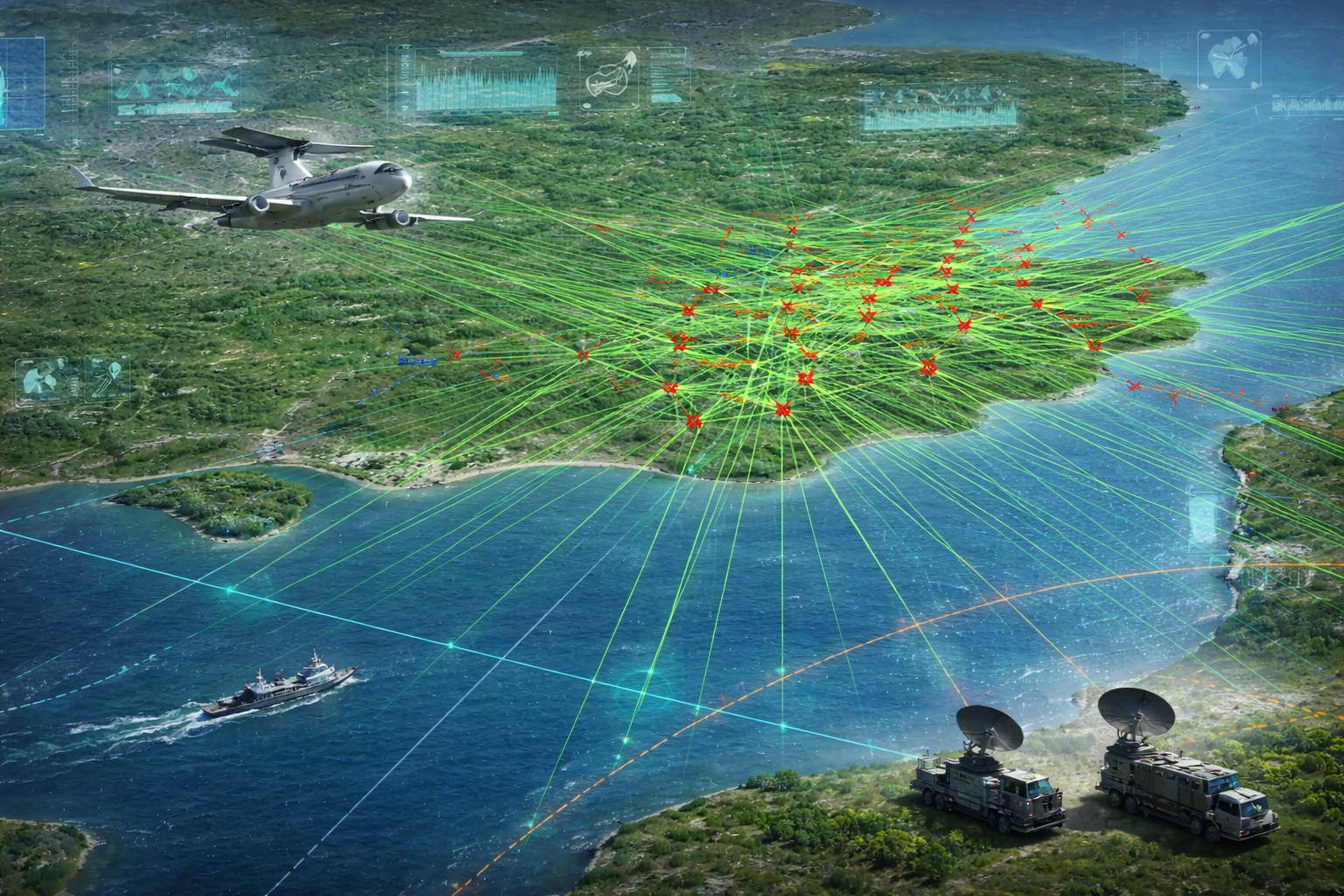
When Identity or Recognition is ambiguous, geolocation accuracy also suffers. For example, multiple identical emitters observed through Lines of Bearing (LOB) can generate numerous candidate positions, of which only some are correct. As emitter density increases, this ambiguity grows exponentially, degrading Situational Awareness (SA) and operational decision-making.
This session explores the underlying problem space of LOB-based geolocation under ambiguity, including how observer count, altitude, and system scaling influence the number of candidate solutions and the probability of identifying the correct emitter location. It introduces a geometric, equipment-agnostic discrimination method based on a graph data-structure with probabilistic agreement between observer pairs, enabling probability imbalance to isolate true solutions.
Unlike approaches that rely on tracking, parametric comparison, or Machine Learning (ML), this method operates at the detection stage, reducing false solutions without added latency or trust concerns. It supports coalition operations by decoupling reliance on emitter identity and enabling geolocation of previously unencountered emitters. Operational use cases demonstrate how asset tasking can further bias probabilities to improve solution accuracy, preserving SA in complex and dynamic EW environments.
LEARNING OBJECTIVES: Attendees will learn/takeaway:
- Outcome 1: Understand the challenges of Line of Bearing (LOB) geolocation and how emitter ambiguity degrades accuracy and situational awareness.
- Outcome 2: Analyze how system factors—such as number of observers, altitude, and linear scaling—lead to exponential growth in false geolocation solutions.
- Outcome 3: Apply a graph-based, equipment-agnostic geolocation discrimination method that reduces false solutions and supports coalition EW operations without reliance on tracking or ML
TARGET AUDIENCE:
EW practitioners, particularly those involved in SIGINT analysis and geolocation.

The Chinese People's Liberation Army has been undertaking a massive modernization effort that will see it "fully mechanize, fully informationized, and fully intelligence-ized." The "intelligence-ization" phase of Chinese modernization is about exploiting the most recent advances in information technology, including aspects of artificial intelligence, but also big data.
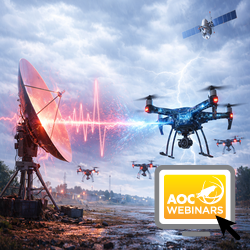
This presentation examines how artificial intelligence is enabling a fundamental shift in unmanned platform RF architecture — replacing discrete radar, communications, jamming, and ESM payloads with a single integrated low-SWAP multifunctional RF system. The key enabler is AI's ability to switch and orchestrate shared apertures and waveforms across all functions in microseconds, continuously rebalancing mission priorities as the electromagnetic environment evolves. We explore the AI technologies driving this capability — from reinforcement learning-based aperture scheduling to cognitive waveform synthesis — while candidly addressing the core tradeoffs: performance versus resource sharing, switching speed versus reasoning depth, and adaptability versus training data dependency. For drone platforms where every gram and cubic centimeter is contested, AI-enabled multifunctional RF is not an incremental improvement — it is the only architecture that makes full-spectrum capability physically possible.
Course Dates: Monday, October 26, 2026 | 8 AM – 5 PM
Course Location: Water’s Edge Events Center
4687 Millennium Drive, Belcamp, MD 21017
Course Duration: 8 hours
Description: This course is designed to help cybersecurity and IT leaders maximize the value of their cybersecurity programs by aligning people, processes, and technology into an effective and sustainable security operation. Participants will explore the critical components that make up a successful cybersecurity program, with a strong emphasis on protecting organizational data from both internal security risks and external offensive attacks.
The focus of the course is understanding how different cybersecurity disciplines share common goals while addressing distinct threats and challenges. Participants will learn how to communicate cybersecurity value and risk effectively through meaningful reporting to upper management and executive leadership, ensuring alignment with business objectives.
By the end of the course, you will be equipped to build or enhance a cybersecurity program that minimizes risk, optimizes team performance, supports operational efficiency, and delivers measurable value. The end goal is a cybersecurity program that protects data, earns executive confidence, empowers employees, and fosters pride in a job well done.
Who Should Attend:
- Software and Hardware Engineers
- Engineering, IT, and Cyber Security Managers
- Executive Leaders
- Course Introduction and Objectives
- The Most Important Factor: The People
- Technology and Tools
- Processes That Drive Consistency and Success
- Scalability Across Different Organizations
- Core Cybersecurity Focus Areas
- Commonalities and Differences Across Cybersecurity Domains
- Risk Mitigation and Executive-Level Reporting
- Wrap-Up: Building a High-Value Cybersecurity Program
Registration
Registration will open this summer. Registration for the course can be added when registering for Cyber Electromagnetic Activity (CEMA) 2026.
Course Pricing
- Non-Member – $750
- AOC Member – $500
Questions related to pre-summit registration can be directed to Samantha Kim, Professional Development Coordinator, at [email protected].
Instructor
Aram Grigoryan is the Regional Account Manager for Ace Embedded. He has more than 15 years of sales, management, and engineering experience across the aerospace, automotive, and even medical sectors. His technical expertise ranges from hardware-in-the-loop system testing to mechanical hardware development and presently onto real-time embedded technology. Grigoryan serves the Mid-Atlantic and Northeast regions in providing the latest and greatest in embedded systems technology for military and commercial application.