Carahsoft Technology Corp.
Carahsoft has built our reputation as a customer-centric organization dedicated to serving the needs of our technology manufacturers, government end users, and reseller ecosystem with Solutions for Government. We have a proven history of helping government agencies find the best possible technology solution at the best possible value. Each customer works directly with a dedicated account representative to determine a solution tailored specifically to meet his or her needs. We combine our extensive knowledge of the technologies we provide, with a thorough understanding of the government procurement process, to analyze needs, provide configuration support, simplify the ordering process, and offer special government pricing.

Upcoming Carahsoft Technology Corp. Events
GovRAMP helps SLED organizations move toward more consistent, trusted cloud security evaluation, but cloud confidence is only the starting point. State, local and education organizations still need visibility, resilience, trusted network services and threat intelligence to make cloud environments operationally ready. Infoblox helps strengthen the infrastructure foundation required to securely operate, monitor and scale cloud services across hybrid and cloud environments. Join Infoblox and Carahsoft for a focused discussion on how GovRAMP is helping SLED organizations create a more consistent approach to cloud security evaluation and procurement confidence — and what comes next after a cloud solution is selected or approved. What You’ll Learn
Attendees will gain practical insight into how state, local and education organizations can think beyond procurement and build secure, resilient cloud operations that reduce risk, strengthen visibility and support the continuity of public services and education missions. |
For two decades, Federal security has focused on traditional boundaries: networks, endpoints, mailboxes and lookalike domains. Today, adversaries have shifted tactics to bypass network defenses entirely and target Government executives, their staff and their families. This is no longer just a fraud or public-relations issue; it is a critical physical-security and mission-continuity threat. According to recent Doppel telemetry:
Join Doppel for an exclusive briefing highlighting findings from the latest threat report (SECR-51: Federal Executive Protection) produced by Doppel’s Social Engineering Counter-Intelligence & Research (SECR) team. Modern attacks against agency leadership are identity-led, AI-accelerated and online-to-offline. Attackers use cloned AI voices to deceive staff, leverage data brokers to obtain home addresses and escalate digital campaigns into physical threats. While security teams often receive six disconnected alerts across different tools, adversaries operate as a single, coordinated campaign. In this briefing, we will demonstrate how to correlate adversary infrastructure, fake personas and multi-channel content to create a unified operating picture that enables your security, intelligence and protective teams to dismantle entire threat networks in hours rather than weeks. |
Join Smartsheet and Carahsoft for a half-day leadership forum bringing together North Carolina government and education leaders to share how they are solving today's toughest operational challenges - doing more with less, gaining visibility across departments and managing complex programs at scale. During this forum, attendees will:
Space is limited. Don't miss out - Register Now! |

Join NetApp and Carahsoft in this session to explore why video surveillance is mission-critical in today’s high-stakes environment, where a single failure can compromise investigations, lose critical evidence, allow suspects to escape and put lives at risk. Discover how modernizing your infrastructure can eliminate NVR single points of failure that can take 50+ cameras offline, simplify scaling and capacity planning, reduce downtime during upgrades, and build a resilient, secure and cost-efficient surveillance foundation.
During this session, learn how NetApp modernizes surveillance infrastructure with enterprise-grade storage at the core delivering:
- Six-nines (99.9999%) availability with no single points of failure.
- Non-disruptive scalability from hundreds to thousands of cameras, even in live production environments.
- Investment protection preserving your existing cameras and VMS software without costly rip-and-replace projects.
- A seamless modernization path replacing fragile NVR silos with a unified, highly available platform
Secure your spot today and ensure your video surveillance is never the weak link.
Do you have time to meet with the Cloud for Good team at Dreamforce 2026? Our home base this week is the Impact Sector Hub, located at 355 Clementina St, San Francisco, a short walk from the Dreamforce campground.
We would love to meet with you and will have our experts on-site to discuss our approach, digital strategies, and solutions tailored to your organization’s unique needs.
Please join us at one or all of the events:
Leadership for Good Summit
September 14
1:00pm-5:00pm
Location: American Book Binders Museum, San Francisco
Stary your week with intention. The Leadership for Good Summit is a cross-sector experience designed for leaders who want to get ahead of what's next. Before the pace of the week picks up, take time to step back, think bigger, and explore how data, AI, and Agentforce are reshaping how organizations drive impact. This is your opportunity to arrive not just early, but ready to lead with clarity and purpose.
State and Local Dinner
September 14
7:00pm-9:00pm
Location: El Dorado, San Francisco
Join Cloud for Good for an exclusive evening bringing together state and local government leaders during Dreamforce. Over dinner, connect with peers and industry experts for candid conversation around how AI, data, and modern technology are reshaping government operations and constituent experiences.
Step away from the Dreamforce crowds to exchange ideas, build meaningful connections, and explore what’s next for the future of government.
Financial Services Reception
September 15
4:30pm-9:00pm
Location: PABU
Join us for an exclusive networking reception with cocktails and passed appetizers on the first night of Dreamforce. Request to attend to reserve your spot, and please remember that a Dreamforce pass is required for entry.
September 16
4:00pm-6:00pm
Location: American Book Binders Museum | 355 Clementina St, San Francisco, CA 94103
Start building the connections that will shape your week.
The Impact Sector Reception brings together leaders from across industries for an evening focused on meaningful conversation, shared ideas, and new relationships.
Before the week gets busy, take the time to connect with peers who understand your challenges and are driving change in their organizations.
Join this reception to:
- Connect with purpose: Build relationships with leaders across sectors who are shaping the future of impact
- Exchange ideas that matter: Have real conversations that spark new thinking and fresh approaches
- Set the tone for the week: Walk into the days ahead with stronger connections and a network you can lean on

You are invited to register for our event: Carahsoft Public Sector Networking Reception at Dreamforce |
We invite you to join us for our annual reception on the evening of Tuesday, September 15, at the Hibernia, one of San Francisco's most historic landmarks. Spend the evening connecting with peers over conversation and refreshments before enjoying a special performance by a world renowned artist and DJ to close the night. This event is open to public sector customers only and pre-registration is required. Registration will close on September 9th and all permitted registrants will receive a separate email confirming access to the event. We expect to reach capacity and this event is nearing, so please do not wait and register as soon as possible. Please reach out with any questions you may have! |
Join NetApp and Carahsoft in this session to explore why video surveillance is mission-critical in today’s high-stakes environment, where a single failure can compromise investigations, lose critical evidence, allow suspects to escape and put lives at risk. Discover how modernizing your infrastructure can eliminate network video recorder (NVR) single points of failure that can take 50+ cameras offline, simplify scaling and capacity planning, reduce downtime during upgrades and build a resilient, secure and cost-efficient surveillance foundation. During this session, learn how NetApp modernizes surveillance infrastructure with enterprise-grade storage at the core, delivering:
A modern NetApp-powered architecture is the difference between preventable failure and uninterrupted protection, preserving evidence integrity and operational continuity. Don’t wait for a failure to reveal vulnerabilities, eliminate blind spots, reduce risk and build a resilient foundation that protects your agency when it matters most. Secure your spot today and ensure your video surveillance is never the weak link. |

Join Carahsoft for a networking reception at Winter's Jazz Club following AWS Imagine on Tuesday, September 15. We reserved a seat just for you to enjoy an unforgettable evening filled with live music from two top-tier acts, refreshments and intimate conversations with your fellow attendees. This is your chance to unwind, socialize with peers and network! Register now to confirm your attendance. We hope to see you there! Due to limited capacity, vendor and reseller attendance is not guaranteed. |
Join eCare Vault, the American Heart Association and Carahsoft for a webinar on September 16th! If you're focused on improving care delivery and outcomes in rural communities, this conversation is designed for you.
During this session, our speakers will explore:
- The core challenges rural systems face include fragmentation, siloed partners and limited shared visibility.
- Strategies and tools for breaking down silos, improving coordination and aligning your organization with key RHTP priorities-guidance that you can immediately apply within your networks.
- How to enable seamless collaboration across hospitals, clinics, social services and community partners.
- Practical ways to align with RHTP priorities such as value-based care, workforce stabilization, community integration and measurable outcomes.
We are looking forward to this conversation. Secure your spot today!
Artificial intelligence is transforming how organizations operate, but success starts with a strong automation strategy that enables consistency, scalability, and efficiency across IT environments. Join Red Hat, Unilogik and Carahsoft for a webinar on how Red Hat Ansible Automation Platform helps automate IT operations, streamline workflows and support AI-driven innovation. In this session, our featured Red Hat expert will cover how to:
Whether you're starting or expanding your automation journey, gain practical insights to maximize value in the age of AI. Register today to learn how to automate with confidence using Red Hat Ansible Automation Platform. |
Education has become one of the most targeted sectors for ransomware attacks. Universities and school districts share a common vulnerability: endpoints everywhere, limited IT staff, tight budgets and users who need access to get their jobs done.
Attackers aren't targeting sophisticated enterprise networks. They're targeting the teacher's laptop, the shared library workstation and the staff desktop running an unpatched OS with local admin rights left on for convenience.
And the attack path is almost always the same: an endpoint with too much privilege.
Join us September 16 for a conversation on how K–12 districts and universities can stop ransomware at the endpoint.
Attendees will walk away with an understanding of:
- Why education endpoints are among the most ransomware-vulnerable in any sector — and what attackers exploit first
- How standing local admin rights amplify the blast radius of every ransomware infection
- How to remove admin rights without disrupting instruction, research or daily operations
- How to build a practical path from where you are today to a least-privilege endpoint environment — without overwhelming your service desk
Key Takeaways:
- A clear model for removing local admin rights in K–12 and university environments without disrupting users
- Practical application control strategies for classrooms, labs, research environments and administrative workstations
- How to align endpoint controls with CISA guidance, FERPA, GLBA and cyber insurance requirements
- How BeyondTrust EPM reduces ransomware exposure before an attacker reaches an endpoint
Executive Order 14409 put a 30-day clock on federal cyber defense. Section 2 sets firm deadlines to harden federal systems, stand up an AI vulnerability clearinghouse and enforce against AI misuse, with key deliverables due July 2 and the frontier-model framework due August 1. The mandate rests on one unstated assumption: that an agency already has a current, authoritative model of how its network behaves. Most do not. The result: defense cannot be prioritized, vulnerabilities cannot be triaged and hardening cannot be proven. In this webinar, Forward shows how agencies can move from point-in-time documentation to a continuously current system of record, built on a mathematically accurate network digital twin. By modeling the hybrid network from live configuration and state, computing every path traffic can take and verifying proposed changes before they ship, agencies can meet the Section 2 deadlines with evidence instead of assumptions, and confirm that systems stay hardened, segmented and compliant throughout the mission, not just at the moment a change is approved. Attendees will learn how federal organizations can:
|
Recent cyberattacks on U.S. municipal water systems have reinforced the importance of cybersecurity across the public sector technology environment. While SAP production systems are designed with strong security controls, sensitive citizen, employee and financial data may also be used in non-production environments for testing, development, training and modernization. Protecting this data across every environment is key to reducing risk and maintaining a strong security posture. Join EPI-USE Labs to learn practical ways to protect sensitive SAP data and PII while maintaining realistic data for critical projects. In this session, we'll cover:
Gain practical strategies to strengthen SAP data security across your organization. If you have any questions, please do not hesitate to reach out. |
This hands-on workshop is where Continuous Threat Exposure Management (CTEM) stops being a framework and becomes a workflow you build yourself. Working in a guided ServiceNow environment enriched with Armis asset and exposure data, you'll walk through a full CTEM cycle against a realistic federal scenario: scoping a mission system, ingesting discovered assets and exposures, prioritizing by real-world exploitability rather than raw scores and mobilizing governed remediation that ties back to risk posture and ATO obligations. You'll get hands-on with two critical pieces: Armis asset and exposure discovery in a live lab environment, then AI Governance controls that ensure your remediation workflows stay compliant and auditable. See how AI-driven prioritization accelerates response decisions while maintaining the governance guardrails your agency requires. By the end, you'll have built a working reference for a closed-loop CTEM cycle you can take back to your agency: Armis-discovered IT, OT, IoT and medical device assets landing in the CMDB, exposure intelligence driving prioritized response workflows in SecOps, AI-governed remediation and control monitoring closing the loop in ServiceNow Risk, and an audit trail that maps each stage back to the federal mandates that apply to your organization. Bring a laptop and come ready to drive, not just listen! |
Events We Are Sponsoring
Mission
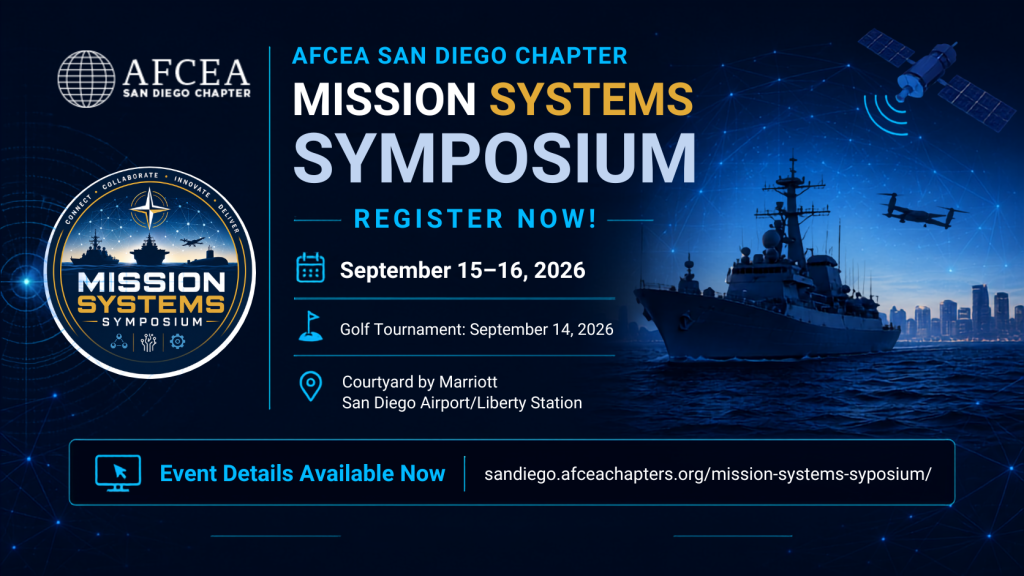
To bring together Government, industry mission partners, the venture capital community, and technology leaders to accelerate Mission Systems transformation, strengthen collaboration, and deliver warfighting capability faster. The Mission Systems Symposium serves as a forum to communicate strategic direction, explore emerging technologies and acquisition approaches, and foster the partnerships required to deliver integrated, mission-ready capabilities at the speed demanded by today’s operational environment.
Objective
The Mission Systems Symposium is designed to move beyond information sharing and toward meaningful dialogue, actionable outcomes, and enterprise alignment.
Through keynotes, panels, interactive discussions, and focused collaboration, the symposium will:
- Communicate organizational, leadership, and acquisition transformations across the Mission Systems enterprise.
- Align Government and Industry on the cultural, operational, and technological changes required to increase speed, innovation, and mission effectiveness.
- Advance collaboration in emerging technologies, artificial intelligence, digital engineering, commercial technology adoption, and acquisition modernization.
- Identify opportunities to accelerate capability delivery through streamlined processes, modular and open architectures, and stronger Government-Industry partnerships.
- Foster a shared understanding of priorities, challenges, and opportunities to ensure mission success in an increasingly contested and rapidly evolving battlespace.
Join us to shape the future of naval information warfare through technology, industry collaboration, and strategic innovation.
In a time of rapid change spurred by AI, the federal conversation about cybersecurity is becoming less about individual technologies or modalities and more about operational effectiveness. Agencies have invested heavily in cybersecurity, yet many still struggle to answer critical questions quickly enough to reduce risk.
Meanwhile, security tools have multiplied faster than agencies’ ability to make coordinated trust decisions. The technology stack has evolved, but security decisions haven’t. Common frustrations include tools that don’t work together the way agencies’ missions do; more data available than ever but less confidence in making decisions; and security decisions that require too much manual coordination across disconnected systems.
Learning Objectives:
- Identify ways to make trust dynamic – responding in real time to real threats – rather than assume trust
- Outline methods to enable AI without creating security blind spots
- Review steps you can take to make faster, more confident security decisions for your agency, such as network segmentation/microsegmentation, using AI to control traffic flow to prevent data loss
Imagine what’s possible tomorrow, today.
Imagine for education, state, and local government is
designed for leaders who are eager to learn how they can better achieve their
institution or organizational mission, improve the efficiency and operations of
their organization, and be inspired by the “art of the possible” through cloud
and AI technology. Imagine is built around public sector leaders sharing real
stories: what they did, what worked, and what they learned. Hundreds of state,
local, and education leaders will be there exploring how AI and cloud
technology is transforming the way agencies and institutions serve their
communities, from enhancing constituent self-service experiences with
intelligent chatbots, to automating document-heavy processes, to predicting
student outcomes without writing code, to freeing up institutional resources
through tools like AI-powered grant generators.
Bring what you learn on the main stage to life with
hands-on, interactive demos with experts you won’t meet anywhere else. Think
outside of what you’re doing today. How can AI-powered chat bots enhance
constituent experience with improved, self-service access to information? When
AI can extract, classify, and process data from documents, automating processes
that traditionally rely on paper forms and records- what efficiencies will that
allow your agency to explore? How can you utilize Amazon Sagemaker Canvas to
predict student performance without writing any code? With a Grant Generator
that creates a comprehensive outline that can be modified with ease, what
resources does that free up for your educational institution? Dive in, look
ahead.
Please register with your .org, .edu, or .gov email
address, as the event is tailored for the public sector audience.

State and local governments are facing increasingly complex cyber threats, limited resources and growing pressure to modernize security operations. With agencies operating across fragmented environments, gaining the visibility and coordination needed to detect and respond to threats can be challenging.
Join Elastic and TrueZero Technologies for part 3 of their webinar series exploring how a Whole-of-State cyber defense framework helps state and local organizations move to a unified, resilient defense posture.
On September 22nd, attendees will learn how to:
- Strengthen visibility: Unify security data for greater threat awareness
- Accelerate investigations: Use AI to detect threats and streamline response
- Scale security AI: Apply AI-driven tools to strengthen cyber resilience
Register now to explore the blueprint for scaling Whole-of-State security with AI-powered analytics.
Government, industry and academia are actively using new or modifying existing digital technologies to assist with changes, improvements, and efficiencies in operation of the business processes, meet customer demands, utilize automation to reduce many manual work processes while improving productivity, and enable these tools to reach a wider audience by reducing geographic barriers. Digital Transformation can improve operational efficiencies, provide more agility and flexibility in day-to-day activities, enable opportunities to grow and expand, and provide new value, satisfaction, and benefit for not only the staff but also the customers and shareholders. Many have dubbed "Digital Transformation as Reimagining How we do Business”.
Digital Transformation needs strong leadership with a clear vision and the willing support of staff to make the needed transition. Another key element of Digital Transformation is understanding what technology is capable of doing and how an agency or organization can make the most use of that technology investment.
This Summit will focus on where Digital Transformation is today, how it has been used to transition to new innovative technologies, and how it has improved overall performance. This event will also include an international element to hear how other countries have utilized digital technologies successfully.
The New York Digital Government Summit is where innovation meets impact!
Bringing together the brightest minds in state and local government, this summit empowers public-sector leaders to explore cutting-edge technologies, modernize operations, and solve pressing challenges. From cybersecurity and AI to data governance and digital service delivery, sessions are designed to spark insight, foster collaboration, and accelerate real-world results. Whether you're shaping strategy or implementing solutions, the Summit delivers valuable peer connections and actionable guidance to help move your mission forward.
Open to Public Sector only.

In Detroit's fast-evolving industrial and tech sectors, building robust enterprise resilience is a top priority. Modern teams need reliable tools that accelerate innovation without compromising operational stability.
Spend the day with Red Hat and Intel in a hands-on Tech Day focused on practical, real-world learning. Learn how security is paramount to operational success, helping you build production-ready skills you can use immediately to reduce risk and enhance your defensive posture.
At this event, you will customize your day by choosing two immersive workshops where you will learn to:
Automate and manage security with Red Hat Enterprise Linux
Design sovereign cloud architectures using OpenShift for multi-cluster data residency
Explore Red Hat AI for deploying and managing private generative AI models at scale
Drive intelligent automation and AI-powered closed-loop workflows with Ansible
Register now Detroit and take part in Red Hat's Tech Day!
Where higher education IT leaders shape what’s next.
The Massachusetts Higher Education IT Leadership Summit is a one-day, invite-only gathering designed for CIOs, IT directors, and digital transformation champions across colleges and universities. Focused on the most pressing issues in academic technology, from cybersecurity and infrastructure to digital learning and AI, the summit fosters peer collaboration, practical problem-solving, and forward-thinking leadership. Attendees gain real-world strategies to drive innovation, modernize operations, and elevate student and institutional success.
Who Should Attend: Senior IT leaders, technology managers, and academic innovators responsible for shaping the future of IT in higher education.

NASCIO conferences facilitate relationship building, peer learning and collaborative solutioning among members
view an agenda from a past event for a better feel
There are no demos or an exhibit floor: the focus is relationships and partnerships centered on the needs of the states
NASCIO excels as the premier community and trusted resource for state CIOs
- Support transition planning, processes and mentoring for state CIOs
- Identify and promote leading practices and innovations to support, enable and transform the business of state government
- Promote and cultivate additional information technology communities of practice in support of the state CIO and transformational government services
- Improve the sharing of experiences and expertise among members, trade associations and strategic partners
- Curate and promote content on information technology issues, implications and solutions

The federal mandate for AI integration is an active operational requirement, but rushing to deploy advanced algorithms within a fragmented legacy IT infrastructure creates profound systemic risks, data leakage vectors, and governance vulnerabilities.
Agencies, both at the federal level and in state and local government, carry the burden of data silos, legacy hardware, and a highly distributed workforce, which combine to create severe risk profiles — such as the accidental exposure of personally identifiable information (PII) and protected health information (PHI).
Learning Objectives:
- Identify and understand the elements of institutional oversight required by OMB memorandum M-25-21 and the NIST AI Risk Management Framework
- Build a plan for IT and data architecture modernization
- Determine where you can introduce low-risk AI capabilities and services to your workforce

The EDUCAUSE Annual Conference connects the best thinkers in higher education technology.
This is THE event where professionals and technology providers from around the world gather to network, share ideas, grow professionally, and discover solutions to today’s challenges. It’s the largest gathering of your peers…people you can relate to, learn from, and stay connected to throughout the year.
As federal agencies accelerate the adoption of artificial intelligence, modernize infrastructure and operate across increasingly complex digital environments, cybersecurity has become critical to mission success. At the same time, agencies face a continuous threat environment marked by sophisticated adversaries, evolving attack surfaces and growing demands for resilience.
The Federal News Network Cyber Leaders Exchange 2026 will bring together federal cyber leaders and industry experts to discuss how agencies can secure the AI-driven federal enterprise while advancing innovation and mission delivery. Attendees will explore emerging strategies, technologies and workforce priorities that will shape the future of federal cybersecurity.
Discussion pillars
- Securing AI systems and data pipelines — Protecting AI models, data integrity and the AI lifecycle.
- Identity as the necessary security perimeter — Advancing zero trust through modern identity and access strategies.
- Operational resilience in a continuous threat environment — Strengthening mission continuity, threat response and cyber resilience.
- Securing critical infrastructure through OT-IT convergence — Protecting operational technology environments while enabling secure integration with enterprise IT systems.
- Ensuring a future-ready cyber workforce — Developing the talent and skills needed to secure tomorrow's federal enterprise.
- Preparing for post-quantum cryptography — Building readiness for the next era of encryption and security.
Register today for a front-row virtual seat!

OCUDU (Open Centralized Unit/Distributed Unit) is a collaborative initiative and open-source project hosted by the Linux Foundation, aimed at accelerating the development and deployment of 5G and 6G Open Radio Access Networks (Open RAN). It provides a common, carrier-grade, open-source software foundation for the CU and DU layers, which are critical components of radio access networks.
The intent of OCUDU is to break vendor lock-in and accelerate the transition from proprietary, hardware-locked RAN systems to software-defined, open ecosystems. It is considered an essential building block to prepare for a 6G-enabled world. The General Services Administration reported last year that the target for establishing 6G as the commercial standard is 2030, because it will require research, innovation, and international agreement on new interoperability standards.
Learning Objectives:
- Understand the components and processes that comprise Open RAN systems
- Evaluate your agency’s systems and the groundwork that can be done now to prepare for open source hardware
Events Where We Are Exhibiting
The Hawaii Digital Government Summit is where innovation meets impact!
Bringing together the brightest minds in state and local government, this summit empowers public-sector leaders to explore cutting-edge technologies, modernize operations, and solve pressing challenges. From cybersecurity and AI to data governance and digital service delivery, sessions are designed to spark insight, foster collaboration, and accelerate real-world results. Whether you're shaping strategy or implementing solutions, the Summit delivers valuable peer connections and actionable guidance to help move your mission forward.
Open to Public Sector only.
The Florida Public Sector Cybersecurity Summit is where government defends the future.
This public sector-focused event brings together IT security leaders, risk managers, and public officials to tackle the evolving cyber threats facing state and local government. Through expert-led sessions, peer exchange, and real-world case studies, attendees gain practical strategies to strengthen cyber resilience, protect critical infrastructure, and lead with confidence in an age of constant risk. Designed specifically for the public sector, this summit delivers insights you can act on and alliances you can trust!
The TribalNet Conference & Tradeshow is the annual gathering of the TribalHub community. It is not just another conference; it is an experience! This is one of the only events truly dedicated to Native American government, gaming, and health technology – with topics that are relevant to what is going on both nationally and locally. The attendees and vendors are open, engaged and ready to make valuable connections! In today’s world, it’s more essential than ever, for business leaders to utilize cutting-edge technologies and leadership strategies across all departments to create sustainable growth and success. The TribalNet Conference & Tradeshow is a great opportunity to take advantage of a growing network of resources, experience and industry connections, ensuring that enterprise and government leaders are in possession of the tools and information that they need to thrive in their industries.
What will you gain by attending?
- Valuable Connections with Vendor Partners and Industry Peers
- Opportunities for Collaboration with other Tribes
- Practical Tools for Business Growth
- Knowledge of the Latest Technology Tools and Resources

Each year, SC provides the leading technical program for the HPC community. The Program is designed to share best practices in all areas of high performance computing. Become a contributor and share your excellence. Presenting at SC is extremely rewarding.
Here’s your opportunity to meet and interact with industry, research organizations, universities, and startups joining us from across the globe. As an exhibitor, showcase your cutting-edge technologies, products, and services to thousands of attendees.
The Students@SC program offers a broad range of volunteer experiences, cluster competitions, and networking opportunities. Put your professional development into overdrive and identify the possibilities within the field of high performance computing.
Industry, academia, and government experts volunteer to design, build, and administer the cutting-edge SCinet infrastructure, providing internet connectivity for attendees and pushing the boundaries of network innovation through research and demos.
The Florida IT Leadership Forum is where tomorrow’s government leaders grow today.
This invitation-only gathering brings together state and local IT executives, emerging leaders, and visionary thinkers for candid conversations on the future of public-sector technology. Focused on leadership development, innovation, and strategy, the Forum goes beyond the tech to address the people, policies, and practices shaping digital government. Through peer exchange and practical sessions, participants gain the insights, relationships, and skills needed to lead their organizations and communities into the future.
For more information or to request an invitation, please contact Jennifer Caldwell.