Government Technology

Upcoming Government Technology Events
As states look for new ways to improve resident engagement and modernize service delivery, AI-powered digital assistants are emerging as a practical solution for enhancing accessibility, streamlining interactions and increasing operational efficiency. Join us to hear how states across the country are using AI assistants to help residents quickly find information, access services and engage with government through natural, conversational experiences.
The session will explore results from multiple state deployments, including improvements in resident engagement, multilingual accessibility and staff efficiency. You’ll also hear firsthand about South Carolina’s implementation, including how the AI assistant is transforming the way residents interact with state government, delivering better service experiences, and creating operational benefits for agencies and staff.
What You'll Learn:
- Key considerations for planning, deploying and scaling a resident AI assistant across agencies
- South Carolina's experience implementing the technology, including deployment strategies and stakeholder engagement
- Where the assistant is delivering the greatest impact for residents and state staff
- Lessons learned, best practices and change management insights from a real-world state deployment
- Practical advice for government leaders evaluating AI solutions to enhance resident engagement and modernize service delivery

Modernizing licensing and permitting can transform how government serves businesses, professionals, and communities. But realizing that vision requires more than new technology. Agencies that take a holistic approach to modernization can streamline operations, improve workforce productivity, accelerate service delivery and support economic growth.
Join Government Technology and Accenture for a discussion on regulatory reinvention and the foundational elements that drive successful technology transformation. Learn how leading agencies are rethinking processes, preparing their organizations for change, improving data readiness, and creating the governance structures needed to maximize technology investments.
We’ll also explore the evolving role of AI in licensing and permitting modernization and hear firsthand insights from a public-sector organization that has successfully approached technology as an enabler of broader organizational transformation.
Key Takeaways:
- Understand the five foundational elements of successful regulatory transformation
- Learn why business process redesign is critical before technology implementation
- Explore how data readiness, governance and change management drive long-term success
- Discover how AI can be embedded into modernization efforts to improve outcomes
- Hear real-world lessons and best practices from a government agency's transformation journey
- Gain a practical framework for advancing licensing and permitting modernization

Secure, reliable access to critical information has never been more crucial for rural hospitals and healthcare providers. Clinicians move constantly between patient rooms, outpatient facilities, ambulances and patients’ homes — and they need reliable connectivity wherever care is delivered. Healthcare organizations manage rapidly growing volumes of digital data, including electronic medical records, high-resolution medical imaging, telehealth services, remote patient monitoring and AI-enabled clinical tools.
This webinar explores the growing importance of resilient, high-bandwidth connectivity in rural healthcare environments and the role it plays in supporting patient care, operational efficiency and workforce productivity. Experts from Verizon and the Center for Digital Government will discuss the challenges rural providers face in maintaining seamless access to applications and data across distributed care settings, as well as emerging strategies for strengthening connectivity inside healthcare facilities and beyond their walls.
We’ll also discuss the new Rural Healthcare Transformation program, which will strengthen and modernize rural healthcare nationwide through $50 billion in federal funding. These grants will help medical facilities develop innovative local solutions to expand access and improve health outcomes.
You’ll learn:
- How evolving models of care are increasing the need for reliable connectivity across hospitals, clinics and patients’ homes
- Why electronic medical records, medical imaging and other data-intensive applications are driving demand for greater bandwidth
- The operational and clinical risks associated with connectivity disruptions
- Strategies rural healthcare providers are using to support secure, seamless access to information wherever care is delivered
- Key considerations for building resilient network infrastructure that can support future healthcare innovations
Attend the live webinar to obtain your complimentary certificate of attendance.

The Los Angeles Digital Government Summit is where innovation meets impact!
Bringing together the brightest minds in state and local government, this summit empowers public-sector leaders to explore cutting-edge technologies, modernize operations, and solve pressing challenges. From cybersecurity and AI to data governance and digital service delivery, sessions are designed to spark insight, foster collaboration, and accelerate real-world results. Whether you're shaping strategy or implementing solutions, the Summit delivers valuable peer connections and actionable guidance to help move your mission forward.
Open to Public Sector only.

As agencies continue to modernize their technology, leaders must ensure employees can collaborate effectively from anywhere while balancing security, compliance and operational efficiency.
Join us for a live webinar as we explore how modern collaboration solutions are helping organizations move beyond simply supporting hybrid work to driving meaningful mission outcomes.
We'll discuss strategies for creating seamless meeting experiences, enabling productive distributed teams and simplifying collaboration technology across your organization.
Our speakers will also explore the advantages of taking a more unified approach to collaboration technology, helping IT teams simplify deployment, support and long-term planning.
Whether you're preparing for your next technology refresh, modernizing meeting spaces or looking to better support a hybrid workforce, you'll leave with practical insights to help your organization collaborate more effectively.
Attendees of this live event can receive a complimentary certificate of attendance.

Artificial intelligence has quickly moved from emerging technology to executive priority. Yet many state and local government leaders are still grappling with the same questions: Where can AI deliver meaningful value? What risks need to be addressed? And how can organizations move from experimentation to sustainable adoption?
This webinar will provide a practical, research-driven look at the evolving role of AI in government. Drawing on insights from IBM's Institute for Business Value and perspectives from public sector leaders, the discussion will explore how organizations are building AI strategies that balance innovation, governance and public trust.
What Attendees Will Learn
- Key findings from recent AI research and what they mean for state and local government leaders
- A practical framework for building an AI strategy
- Real-world government use cases
- Why organizations are increasingly prioritizing AI capabilities that are built into the systems employees already use — rather than adding disconnected tools that create new complexity, governance challenges and security risks
Budget constraints, legacy systems, and rising constituent expectations are pushing state and local government IT teams to do more with less. With 87% of organizations planning to deploy AI for IT service management (ITSM) within the next 6–24 months, public sector IT leaders can't afford to get lost in experimentation.
In this session, we examine how AI and no-code automation are being combined to modernize public sector service delivery, what the data reveals about moving from pilot projects to scalable outcomes, and why executive leadership is often the difference between isolated pilots and organization-wide success.
Walk away with a clear, defensible roadmap for bringing modern ITSM to your agency without adding headcount or compromising compliance.
- 82% of organizations with widespread AI ITSM report significant reduction in ticket volume
- Reduce technician burnout by eliminating 2-3 months of manual tasks
- No-code platforms deliver rapid ROI — often within 6–12 months
- Integrate to hundreds of internal systems without developers
Who should attend: State and local CIOs, CTOs, IT directors, IT operations and service management leaders, enterprise architects, digital services leaders, and other technology decision-makers responsible for modernizing government operations and improving service delivery.
Join this webinar live to receive a certificate of completion!

As IT environments grow more complex, technology leaders need more than data to make the best decisions. They need clear, actionable insights.
Without a unified view of devices, applications and user experience across the organization, it becomes increasingly difficult to prioritize investments, respond proactively to issues and maximize limited resources.
Join us for this live webinar as we explore how modern platforms can empower IT leaders with comprehensive visibility across their digital environment. We’ll discuss real-world use cases that demonstrate how greater visibility leads to a more proactive approach to IT operations.
Whether you're supporting digital transformation initiatives, planning technology investments, or looking for ways to offset rising operational costs, you'll learn how actionable insights can help your organization become more efficient. Discover how a unified view of your IT environment can support modernization efforts while helping your team deliver better experiences for employees and constituents alike.
Attendees of this live event can receive a complimentary certificate of attendance.

State of Technology – California Industry Forum 2026 is the premier industry event focused on gov tech in the State of California. This half-day event is designed to provide sales and marking leaders with insights to help turbocharge business strategies and validate sales and marketing activities. Why attend?
- Get exclusive insights from the state CIO and government tech leaders about the hottest opportunities, emerging trends and groundbreaking initiatives shaping California’s gov tech market.
- Gain in-depth knowledge on the state’s IT priorities and plans based on the freshly released 2027 budget.
- Take a deep dive into the technology trends disrupting the status quo and revolutionizing how California’s government serves the public.
- Get insights into the driving forces behind government IT spending.
- Network with fellow industry leaders, share ideas and forge partnerships.
Agenda and speakers to be announced.
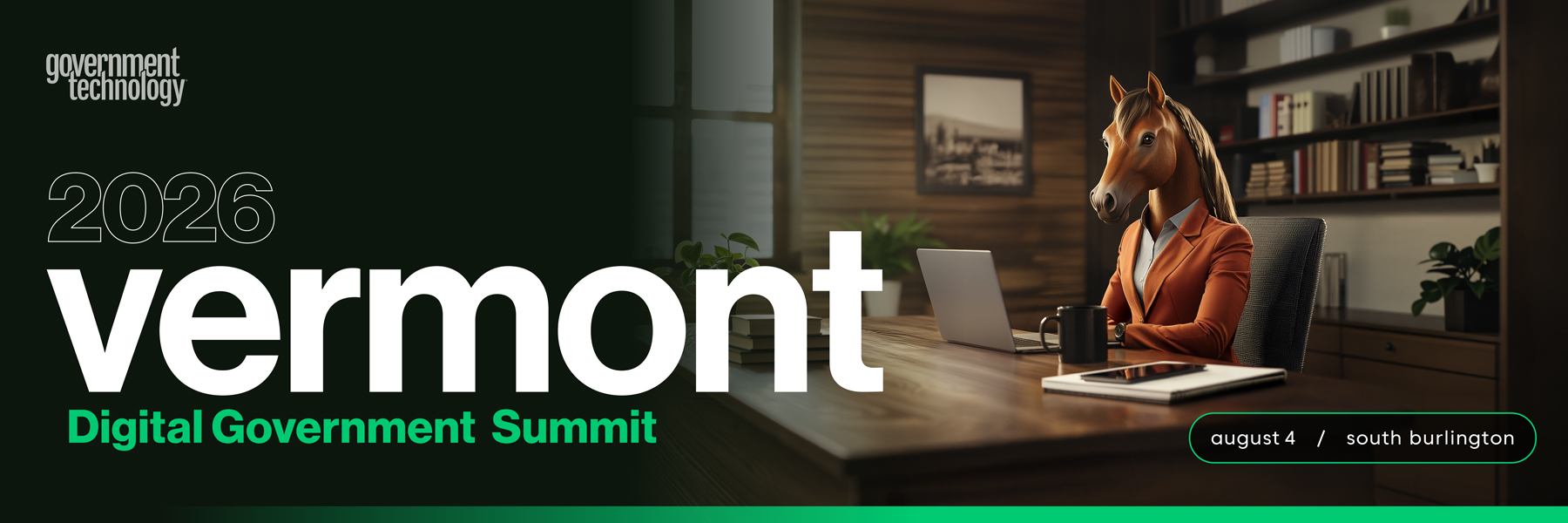
The Vermont Digital Government Summit is where innovation meets impact!
Bringing together the brightest minds in state and local government, this summit empowers public-sector leaders to explore cutting-edge technologies, modernize operations, and solve pressing challenges. From cybersecurity and AI to data governance and digital service delivery, sessions are designed to spark insight, foster collaboration, and accelerate real-world results. Whether you're shaping strategy or implementing solutions, the Summit delivers valuable peer connections and actionable guidance to help move your mission forward.
Open to Public Sector only.

State government technology leaders are under increasing pressure to modernize legacy systems, improve constituent experiences, strengthen cybersecurity and deliver measurable business outcomes — all while navigating budget constraints, workforce challenges and rapidly evolving technologies.
In response, many states are expanding their digital services strategies by adopting new approaches to service delivery. Leveraging human-centered design, agile development, data-driven decision making and emerging technologies such as AI, these teams are helping governments deliver value faster and more effectively than traditional approaches.
Join the Center for Digital Government for a conversation with state leaders who are building digital services organizations across the country. Drawing on lessons learned from successful state initiatives, this webinar will explore how governments are organizing for innovation; accelerating the delivery of high-impact services; and balancing rapid transformation with enterprise governance, architecture and security requirements.
You'll gain insights into:
- The evolving role of Digital Services organizations and approaches in state government
- How leading states are delivering business outcomes and improving constituent experiences faster
- Strategies for integrating innovation with enterprise architecture, governance, and cybersecurity
- Emerging opportunities to leverage AI and other technologies to modernize service delivery
As states continue to rethink how government services are designed, delivered and measured, the Center for Digital Government brings together the leaders and practitioners at the forefront of this transformation. Register today to hear directly from state executives driving the next wave of digital government innovation.

As generative AI becomes part of everyday work, state and local agencies must balance innovation with responsible governance. Employees are increasingly using AI-powered collaboration and productivity tools — sometimes outside approved channels — creating new risks for sensitive data and public trust.
Join GovTech and Proofpoint to explore practical strategies for governing AI while enabling employees to work more effectively. In this live session, our speakers will cover:
- Building an AI governance strategy that supports innovation and security.
- Identifying and reducing risks from shadow AI and unsanctioned tools.
- Strengthening protections against insider-driven data loss.
- Establishing guardrails for secure AI-enabled collaboration.
Whether you're developing your first AI governance framework or strengthening existing controls, you'll leave with actionable insights for enabling AI securely across your organization. Join us to receive a complimentary certificate of attendance!
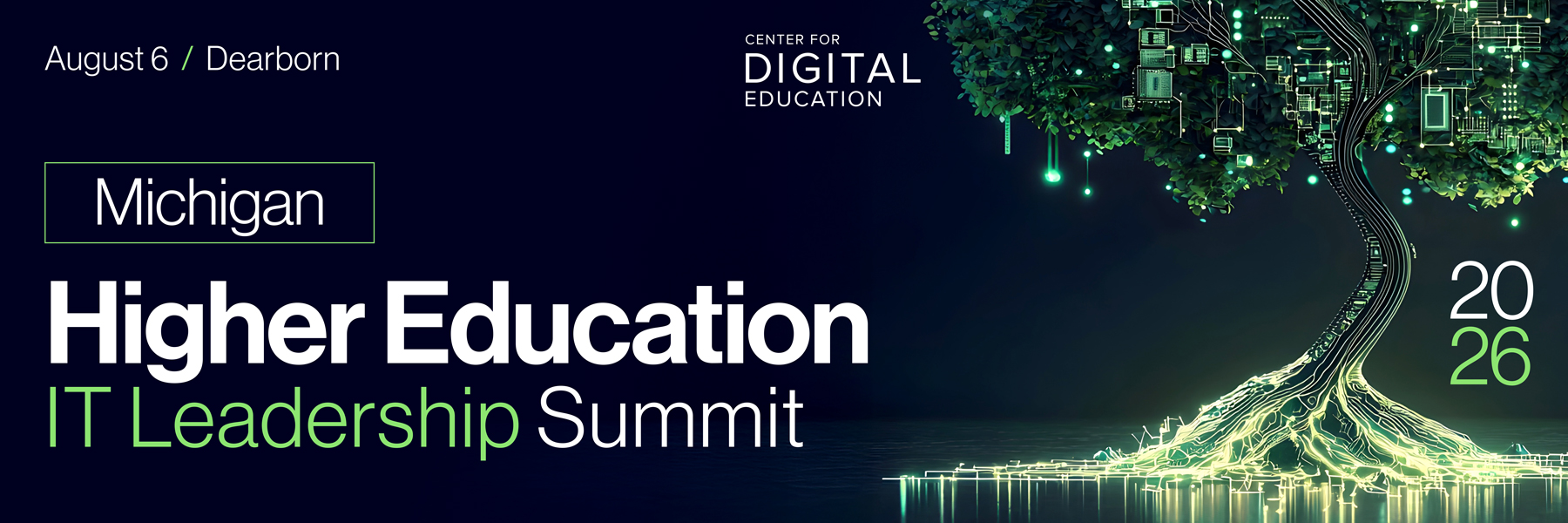
Where higher ed IT leaders shape what’s next.
The Michigan Higher Education IT Leadership Summit is a one-day, invite-only gathering designed for CIOs, IT directors, and digital transformation champions across colleges and universities. Focused on the most pressing issues in academic technology, from cybersecurity and infrastructure to digital learning and AI, the summit fosters peer collaboration, practical problem-solving, and forward-thinking leadership. Attendees gain real-world strategies to drive innovation, modernize operations, and elevate student and institutional success.
Who Should Attend: Senior IT leaders, technology managers, and academic innovators responsible for shaping the future of IT in higher education.
Open to higher education institutions only.

AI efforts are increasingly aligned with organizational strategy, paired with value and risk frameworks, and built with an eye toward sustainable outcomes for both workforces and the public. From community-facing service delivery to cross-sector partnerships to skilling programs, the AI 50 represents the best of what happens when the public sector leads with intention. By sharing and learning openly, we rise together.
Pipeline in the public sector isn’t always visible—but it is building. Learn how to identify the signals that indicate what’s working, align sales and marketing, and turn engagement into real pipeline momentum.
In state and local government markets, understanding what’s driving pipeline isn’t as simple as tracking leads or closed deals. Buying cycles are longer, stakeholders are broader, and progress happens in stages that don’t always show up in traditional dashboards.
The challenge isn’t a lack of performance—it’s a lack of visibility into what’s driving pipeline.
In this 30-minute session, e.Republic breaks down how pipeline builds in the public sector—from early signals to momentum, alignment, and opportunity progression.
You’ll learn how to identify what’s driving pipeline, how to strengthen performance at each stage, and how to clearly communicate what’s working to leadership.
What You’ll Learn
- How to identify the signals that indicate pipeline is building across your funnel
- The three layers where pipeline builds: Coverage · Conversion · Velocity
- How to turn engagement into qualified conversations and pipeline progression
- Where sales and marketing alignment drives measurable impact
- How to communicate what’s driving pipeline clearly to internal stakeholders and leadership
Who Should Attend
- Private industry gov tech sales and marketing leaders and demand gen teams
- Content, campaign, and product marketing teams
- Sales or partner managers who collaborate with marketing to influence public sector deals
Don’t just measure activity—understand what it means. In the public sector, pipeline is built through signals, strengthened through alignment, and realized through progression.
Join us to learn how to turn signals into pipeline—and understand what’s driving it.