Carahsoft Technology Corp.
Carahsoft has built our reputation as a customer-centric organization dedicated to serving the needs of our technology manufacturers, government end users, and reseller ecosystem with Solutions for Government. We have a proven history of helping government agencies find the best possible technology solution at the best possible value. Each customer works directly with a dedicated account representative to determine a solution tailored specifically to meet his or her needs. We combine our extensive knowledge of the technologies we provide, with a thorough understanding of the government procurement process, to analyze needs, provide configuration support, simplify the ordering process, and offer special government pricing.

Upcoming Carahsoft Technology Corp. Events

Join fellow public sector finance leaders for an exclusive networking reception at this year’s GFOA Annual Conference. After a full day of sessions, relax and connect with peers and industry experts who are helping to shape the future of state and local government finance.
These organizations support state and local governments in modernizing enterprise resource planning (ERP) systems, strengthening financial reporting, improving procurement and inventory visibility, enhancing compliance and driving data-informed decision-making. This reception is a great opportunity to continue these conversations in a casual, engaging setting.
Join us at the reception to:
- Meet and network with state and local finance peers
- Discuss ERP modernization, cloud migration, AI and financial transparency • Share lessons learned from recent transformation initiatives
- Build meaningful connections in a relaxed environment
Join your peers for cocktails, small plates and conversation with leaders who understand the challenges and opportunities facing public sector finance. Space is limited. Secure your spot at this exclusive networking reception.
Are your customer service, field operations and sales teams still working across disconnected systems? Join Zeb, a ServiceNow Premier Partner, for an exclusive, hands-on CRM Roadshow featuring two live demos showcasing ServiceNow’s fully integrated CRM capabilities. See how AI-powered workflows, Now Assist and agentic AI can transform the customer journey—from the first customer call and field dispatch to quote-to-cash—all on a single platform. What attendees will experience:
Don't miss this opportunity to see ServiceNow CRM in action and discover how an integrated platform can help streamline operations and improve the customer experience. |
Public Sector security leaders don’t need more AI hype—they need operating models built for mission demands. As AI moves from copilots to autonomous agents, the biggest risk isn’t just adoption, it’s deploying AI with outdated assumptions about trust, oversight and readiness.
This session will highlight five critical mistakes organizations make when securing AI systems and applying AI to SecOps.
During this webinar, attendees will learn:
- Why traditional access controls fail against autonomous AI agents operating at machine speed
- How outdated oversight models create blind spots as AI takes on analyst-level decisions
- Where legacy trust assumptions break down when AI systems act without human-in-the-loop review
- What readiness actually requires before granting AI agents operational authority in the SOC
- How to close the gap between AI adoption speed and AI governance maturity
In this session, you’ll see the Workvivo platform in action, explore real-world use cases and hear customer success stories. Partners will leave with a clear understanding of how to position and sell Workvivo as part of the broader Zoom Workplace ecosystem.
Why Attend:
- Experience a demo of Workvivo — a live walkthrough of the platform’s key features and integrations with Zoom Workplace.
- Understand the important problems it solves — from disconnected teams to low engagement and culture dilution.
- Learn from success — hear how a customer achieved 80% engagement after replacing their legacy intranet with Workvivo.
- Get sales ready — discover how to identify opportunities, ask the right discovery questions and position Workvivo for maximum impact.
Health and Human Services (HHS) agencies face unprecedented operational pressure, balancing historic case volumes and multi-layered regulatory frameworks with high-stakes decisions like foster care assignments and benefits distribution. Traditional administrative workflows struggle to keep pace without increasing compliance risks or impacting client outcomes. Join Google Public Sector, Daston and Carahsoft for an executive webinar demonstrating how a custom Gemini Enterprise Agent transforms complex public sector decision-support into a fast, compliant and human-centered workflow. By pairing Google Gemini Enterprise with Google BigQuery, Daston converts dense policy manuals into real-time, data-backed operational scoring models that empower caseworkers rather than replacing them.
|
A fleet readiness gap. A supply chain disruption. A budget that has to stretch further without sacrificing mission outcomes. These are the daily realities for federal agencies, and the decisions behind them demand more than instinct. They demand transparency, defensibility, and a clear line from data to action. That is why Gurobi, the leader in mathematical optimization, are teaming up to help public sector agencies turn these high-stakes tradeoffs into confident, defensible decisions. |
During this webinar, attendees will learn about:
|
Modern cities are drowning in disconnected data from thousands of IoT devices—traffic cameras, environmental sensors, infrastructure controllers and public safety equipment—yet struggle to turn this information into meaningful action. In this session, discover how leading municipalities are transforming their operations by connecting these devices directly to an integrated platform that doesn't just collect data, but drives real-time responses across departments.
We'll explore how cities are breaking down traditional silos to create a unified operating system for urban services to maximize safety, efficiency and minimize response times. See how a pothole sensor can automatically trigger work orders in public works, how traffic patterns detected by smart cameras can adjust signal timing and alert emergency services or alert to near misses at critical intersections or how environmental monitors can coordinate responses across health, transportation and facilities departments—all without manual handoffs or departmental barriers.
Learn practical approaches to building your connected city infrastructure, including strategies for device integration, cross-agency workflows and creating closed-loop automation that turns sensor data into citizen outcomes. Whether you're just beginning your smart city journey or looking to maximize your existing IoT investments, you'll leave with actionable insights for creating a truly integrated platform that makes your community more responsive, efficient and livable.
Join us as Parascript explores a critical challenge facing government agencies: not only understanding what a document says, but determining whether it can be trusted.
- Discover how AI can help government agencies verify document authenticity and improve trust in critical workflows.
- Learn how advanced signature verification and handwriting analysis can detect fraud and reduce risk.
- Understand how intelligent document processing can automate data extraction, streamline reviews and reduce manual effort.
- Evaluate the role of specialized AI versus generative AI in sensitive government document workflows, with a focus on accuracy, privacy and governance.
Federal courts are being asked to improve efficiency while managing increasingly complex administrative processes. Yet paper forms, wet signatures, email routing and spreadsheet tracking can still create unnecessary delays across court operations.
Join us to explore practical ways courts can modernize these workflows without replacing the systems they already rely on. Through real-world use cases and a live demonstration, you’ll see how secure digital workflows can help streamline procurement, court administration, HR and probation and pretrial services.
During This Webinar, You'll Explore:
- Streamlined procurement: See how interpreter contracts, vendor onboarding and purchase requisitions can move through digital workflows with greater visibility.
- Simplified court operations: Explore ways to streamline case initiation forms, jury paperwork, court orders and other administrative processes.
- Mobile document execution: Learn how probation, pretrial and defender services can support remote document completion and execution.
- Practical modernization: Discover how starting with one targeted workflow can create a foundation for broader process improvements.
- Simplify video streaming and archiving with intuitive tools designed specifically for government workflows
- Maintain accessibility by providing ADA-compliant video transcription, closed captioning and advanced spoken word search features—ensuring public meeting information is accessible to all stakeholders, including those with disabilities
- Get, and stay, compliant with continuous updates to meet WCAG 2.2 AA standards
- Extend your team’s capabilities without hiring additional staff
- The new risks introduced by autonomous AI agents accessing government and education systems
- Identifying sanctioned and unsanctioned AI use across an agency or institution
- Protecting sensitive constituent, student and employee data used by AI applications and agents
- Detecting and responding to AI-specific runtime threats targeting public sector environments
- Establishing an ongoing operating model for AI governance that keeps pace with evolving state, federal and sector-specific regulations
Organizations today operate in an environment defined by accelerating technological change, evolving regulations, shifting customer expectations and increasing operational complexity. Yet many enterprises still rely on disconnected systems, manual processes and periodic transformation efforts that struggle to keep pace with change. The result is slower decision-making, duplicated effort, increased risk, technology sprawl and a growing disconnect between strategic objectives and operational execution. A Self-Evolving Enterprise addresses these challenges by creating a continuous cycle of sensing, learning, deciding and adapting across the organization. By integrating human intent, governance, operational intelligence, AI and automation, organizations can continuously identify opportunities, optimize processes, improve mission outcomes and respond to emerging risks in real time. Rather than treating transformation as a one-time initiative, Self-Evolving Enterprises make adaptation a core organizational capability - enabling greater agility, resilience, efficiency and long-term success. During the webinar, attendees will learn:
|

Attending Red Hat Government Symposium 2026?
Carahsoft is hosting a reception for Symposium attendees at Proper 21, a five-minute walk from the Ronald Reagan Building and International Trade Center.
Starting at 4:00pm ET, the event will bring together Red Hat's partner and customer communities to continue conversations examining how open platforms, intelligent automation and AI-ready infrastructure can drive real-world mission outcomes with speed, while minimizing risk.
Please wear your Red Hat Government Symposium 2026 badge for entry.
Qualys' mission doesn't pause for a change window, and neither do the actors targeting it. AI has cut exploitation timelines from weeks to hours, and threat actors are weaponizing federal vulnerabilities faster than most agencies can triage them. CISA BOD 26-04's 3-day remediation clock reflects that shift directly; it wasn't built for the pace agencies have historically responded to. Agencies still running human-paced triage and manual patch cycles face more than a compliance gap. They face a mission-readiness gap: the inability to close exposures before adversaries act on them. Join Qualys for a closer look at what it takes to detect, prioritize and remediate at the speed BOD 26-04 now demands, including a live demonstration inside a Risk Operations Center. Key Takeaways:
|
Dell Technologies, Fortinet Federal, Vertiv and Carahsoft invite you to our federal networking reception at TechNet Indo-Pacific 2026.
Don't miss out on this exciting event and register today!
Events We Are Sponsoring

AI investment is exploding, but most agencies struggle to prove they are delivering measurable business outcomes. Administrators are frustrated with technical metrics that do not translate into terms that describe customer-facing improvements.
Quantifying the benefits and return on investment (ROI) is so difficult because agencies often lack clear KPIs and may face an initial dip in productivity before value is realized. Time savings or employee productivity gains are often qualitative and hard to translate into financial benefits.
Enterprise Architecture teams, meanwhile, are connecting AI initiatives to service strategies, value streams, customer journeys, and measurable outcomes – and generating what credible service improvement looks like.
Learning Objectives:
- Review the underlying reasons why tracking gains from AI use are so difficult, such as a lack of defined metrics in advance or hidden bottlenecks that can be caused in one department by increased output in another department
- Understand how your EA teams are measuring performance outcomes and connecting them to business impacts

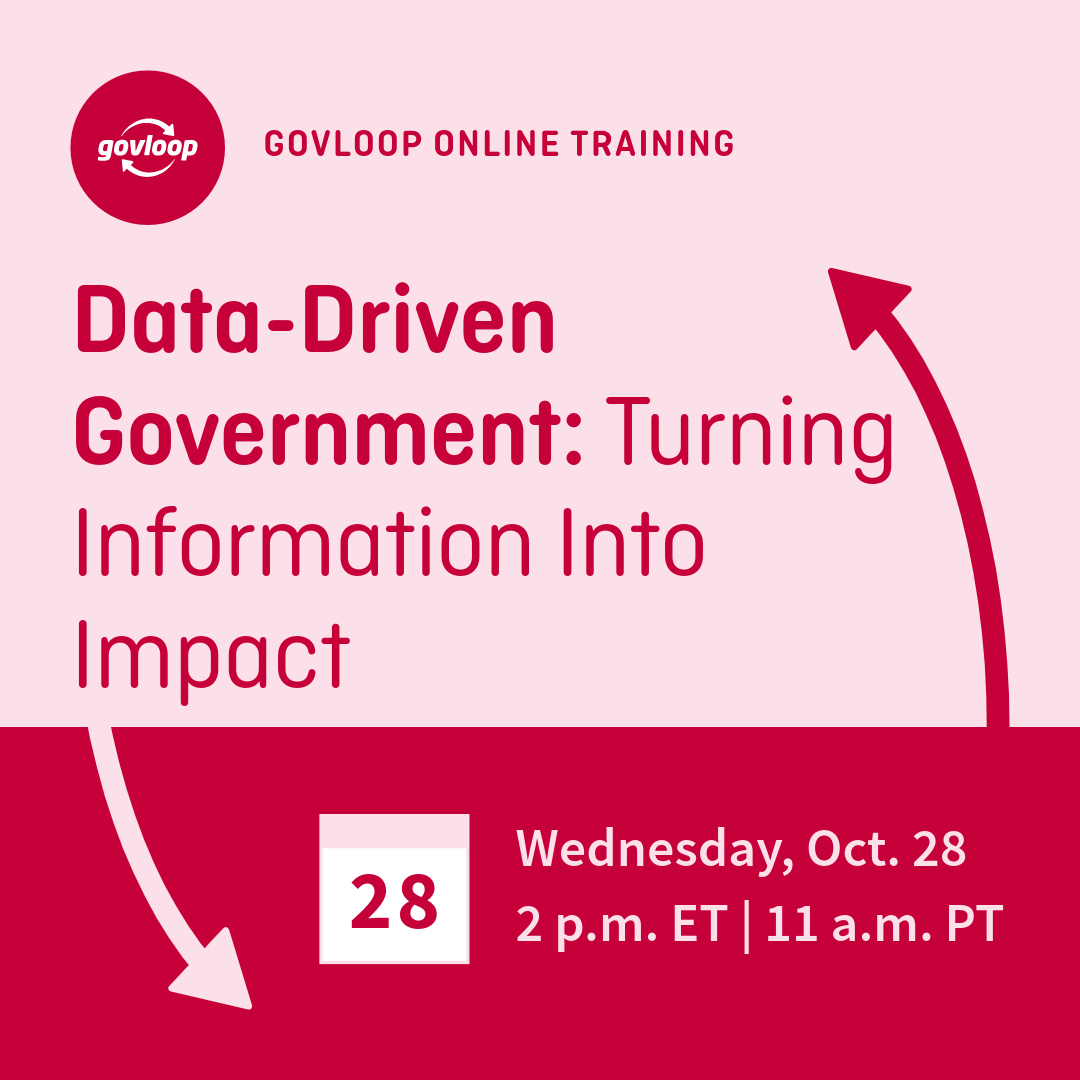
Government agencies have more data than ever. The challenge is turning that information into smarter decisions, better services, and stronger mission outcomes.
From AI and analytics to dashboards and data sharing, agencies are finding new ways to put data to work. But success isn't just about collecting information. It's about making it actionable.
Join us online Wednesday, Oct. 28, from 2-2:50 p.m. ET/11-11:50 a.m. PT to hear how government leaders are using data to improve operations, drive decisions, and deliver greater impact.
You'll learn:
- How agencies are turning data into real-world results.
- The tools and strategies helping leaders make faster, smarter decisions.
- Actionable insights for building a more data-driven organization.

The way we manage content is changing fast. Are you ready to lead the way?
Join Acquia, Stacks and Carahsoft for an interactive workshop designed to move you beyond the basics and into the next generation of Acquia DAM. We’re stepping away from the manual grind to explore a world where AI helps with the heavy lifting, and data proves your strategic value.
This isn’t just a "sit and listen" session. You’ll get hands-on with our latest features, like natural language search and duplicate detection, and learn how to turn our new Insights Dashboards into a powerful story of ROI for your leadership team. We’ll also walkthrough a simple framework to use LLMs alongside your DAM, and even prototype future LLM integrations.
Come for the technology, stay for the community. You’ll hear real-world success stories from fellow admins and end the day with an open dialogue to exchange ideas and solve your toughest challenges together.
What's Covered?
- Discover latest DAM features, like natural language search, and how to use them
- How to be more data-driven with new Insights dashboards
- Prototype to Production: Using your LLM to help with DAM tasks
- Participate in a hands-on workshop to deepen your skills and understanding on AI, Integrations, & Insights

As artificial intelligence continues to advance, legacy security solutions often turn into silos. Privileged Access Management (PAM), Identity and Access Management (IAM) andon-human identities (NHI) all started as specific types of identity solutions. However, they turn into silos as soon as a single workflow runs across them — that is, when an entity, human or machine, holds an identity in each system.
One approach is extending the rigor of privileged access management to every identity that carries privilege: workforce users, workloads, machines and AI agents. Using a next-generation identity security platform to discover, control and govern all identities eliminates the differentiation between access types or levels, removing the silos that leave modern organizations exposed.
Learning Objectives:
- Understand how uncontrolled agentic access can exploit legacy privileged access technologies, turning identity into a primary attack vector.
- Outline the role that identity plays in tracking and recognizing machines and their activities.
- Establish metrics to measure progress toward adopting a single identity security platform across all levels — from users to workload processes, machines and AI agents

U.S. federal agencies manage a broad array of tasks that touch virtually every aspect of Americans’ lives. Civilian, defense, and intelligence agencies are all currently facing requirements to modernize their systems, aimed at providing better user experience and fulfilling their agency’s mission.
Agencies today are navigating a constant stream of change, whether that’s modernizing infrastructure, rethinking virtualization, adopting cloud, defending against evolving cyber threats, or figuring out how to safely operationalize AI. The challenge is twofold: recovering from disruption you can’t prevent while enabling change without creating disruption in the first place.
Learning Objectives:
- Understand operational resilience for organizations navigating infrastructure modernization, virtualization change, cloud adoption, evolving cyber threats, and emerging AI risks.
- Understand how application-centric protection supports the rapid, automated, and orchestrated recovery of mission-critical services while minimizing data loss.
- Evaluate the importance of non-disruptive testing and multi-site analytics and reporting, to ensure readiness for real-world scenarios like cloud adoption, natural disasters, coordinated cyberattacks, and data migrations.
- Explore how agencies can identify and recover from unintended actions by AI agents while maintaining operational control.

Federal agencies, along with state & local governments and education (SLED) institutions are facing growing endpoint complexity, expanding cyber threats, and increasing pressure to do more with limited resources and budget. Today’s IT environments span numerous operating systems, device types and locations, creating operational blind spots that make it difficult to maintain security, compliance and a productive digital experience for end users.
At the same time, the pace of vulnerability discovery, patching requirements and AI-driven threats has outgrown what manual processes can effectively manage. Fedeal and SLED organizations need a new approach, one that combines trusted visibility, intelligent automation and human oversight to proactively reduce risk and improve operational resilience.
Learning Objectives:
- Understand the need for a new approach to autonomous endpoint management in a time of AI agents that you and your team may not know about.
- Evaluate the differences between autonomous endpoint management and device management to recognize the role each plays in hybrid system security.
- Identify all the tools your organization has acquired over time to address individual problems and how they can be consolidated to build a more unified approach to security management.
- Explore how Federal and SLED organizations like yours are using Autonomous Endpoint Management to modernize operations, improve compliance and build a more resilient cybersecurity posture.
- Understand the role of governed autonomy including how organizations can adopt AI-driven operations while maintaining oversight, accountability and public trust.

Attackers aren’t waiting for your security operations center to catch up.
AI is shrinking attack timelines from hours to minutes — and sometimes seconds — while many state and local government security teams are still piecing together identity, endpoint, network, cloud and other signals across disconnected tools. The problem isn’t a lack of security data. It’s getting the right context to analysts fast enough to act.
Join Government Technology for a practical look at the agentic SOC, an emerging operating model that puts AI agents to work on the repetitive, time-consuming parts of security operations. We’ll explore how agents can tune detections, enrich alerts, connect related signals and assemble pre-investigated cases while analysts retain control over policy, judgment and consequential response actions. You’ll also hear how this approach can help lean government security teams spend less time sorting through alert queues and more time on threat hunting and detection engineering.
Why attend:
- See where AI agents fit in day-to-day SOC operations.
- Find out how to cut through alert noise with automated enrichment and correlation
- Learn how to keep analysts in control of high-impact security decisions
We are pleased to offer 1.0 continuing professional education (CPE) credits to those who attend the event. Carahsoft is registered with the National Association of State Boards of Accountancy (NASBA) as a sponsor of continuing professional education on the National Registry of CPE Sponsors. For more information on the CPE credit we are offering, Carahsoft’s CPE sponsor (NASBA), and the submission process, please click here.
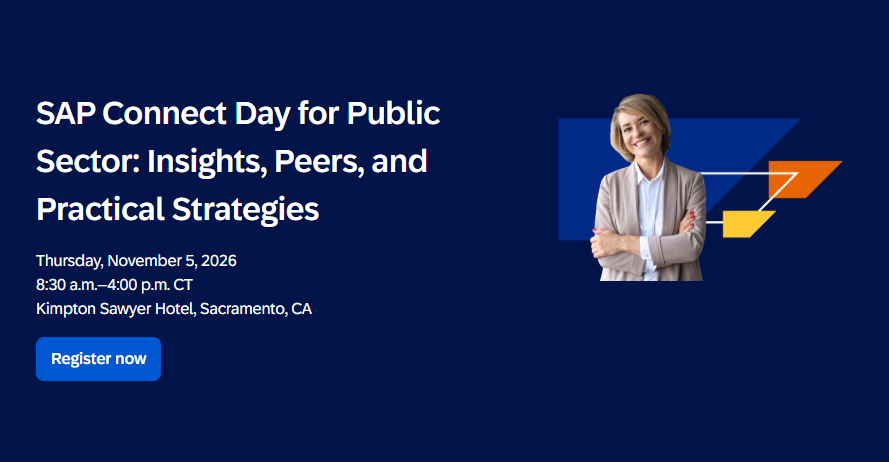
State and local agencies have clear priorities—but too often, teams are waiting on approvals, reconciling data across systems, and building reports that are outdated by the time decisions are needed.
What if leaders could act on current information, reduce manual work, and respond faster to changing conditions?
Join us at SAP Connect Day for Public Sector to explore how state and local government organizations are using AI, automation, and connected business processes to strengthen compliance, improve operational resilience, and deliver better outcomes for residents.
- Hear keynote insights from Teri Takai, Senior Vice President, Center for Digital Government, e.Republic: “Governing at the Speed of Change: Technology, Trust, and Transformation in the Public Sector.”
- See how SAP’s Autonomous Enterprise vision applies to state and local government—grounded in security, compliance, and accountability.
- Learn from your peers about practical steps toward more automated, data-driven operations that improve service delivery.
- Join interactive roundtables on topics including:
- Data readiness for AI and analytics
- Adoption and change management
- Financial and workforce management
- Procurement and supplier management
Register now to reserve your limited spot. This is your chance to network with peers, learn from experts, and walk away with practical strategies to make government smarter, faster, and more resilient. We look forward to seeing you there!

Artificial intelligence is changing the financial risk landscape for state and local government. As AI makes it easier to create convincing receipts, invoices, vendor documentation, and other financial records, traditional controls and manual review processes may be increasingly challenged to identify what is legitimate, what is an error, and what could signal fraud.
At the same time, AI and automation are giving government finance teams new ways to strengthen oversight. By identifying unusual spending patterns, flagging potential policy violations, detecting anomalies earlier, and focusing attention on higher-risk transactions, emerging technologies can help organizations move from reactive review toward more proactive financial controls.
Learning Objectives:
- Understand how AI is changing the nature and sophistication of financial fraud
- Identify where manual processes and traditional controls may leave gaps in detection and oversight
- Outline how AI and automation can help identify anomalies, policy exceptions, and potential fraud earlier
- Evaluate ways to strengthen financial controls without adding unnecessary administrative burden
- List key considerations for balancing AI-enabled capabilities with governance, transparency, and human oversigh

A downed aircraft and an urgent facilities work order fail the same way. The published procedure stops answering, and the next step gets rebuilt from memory across shifts, systems and the people who happened to be on.
For the aircraft, that is history in the maintenance system, sister-aircraft records, the tech order, supply status and a cannibalization call made over the radio. For the building, it is the CMMS, the equipment manual, the asset’s repair history, and a dispatch decision made from a phone call. In both cases the hours go to reconstruction before anyone turns a wrench, and the readiness or uptime number does not show the cost until later.
Across the Department of War, federal civil agencies and the contractors who hold their sustainment and base operations contracts, maintenance leaders are examining how decision support can shorten the path from an open problem to an approved action without taking authority away from the person who signs the work order.
Learning Objectives:
- Find where the work stalls: Identify the handoff points where aircraft recovery and facilities work orders lose hours in reconstruction (failed troubleshooting, backordered parts, open engineering requests, work discovered mid-repair) and what each one costs in down time
- Judge a recommendation: Understand what an evidence-backed next action looks like in both domains, including provenance, confidence and the difference between a record and an inference
- Decide for the fleet or the installation, not one asset: Review how cannibalization, controlled exchange and dispatch decisions can account for the second aircraft, the second building and the upcoming requirement before anyone approves them
- Keep the decision with the maintainer: Outline which parts of the work can be assembled automatically, which stay with maintenance leadership, and what a bounded pilot on your own data looks like for one squadron or one installation
The CrowdStrike Veterans Race of Remembrance Powered by AWS returns November 6–8, 2026, at VIRginia International Raceway as North America’s premier endurance motorsport event dedicated to honoring military service and advancing veteran recovery through motorsport. Sanctioned by the United States Auto Club (USAC) and presented in partnership with CrowdStrike and Amazon Web Services, the event is held annually over Veterans / Remembrance Day weekend and stands as a powerful tribute to those who have served.
Inspired by the original Race of Remembrance founded by Mission Motorsport in the United Kingdom, the 2026 edition introduces an expanded endurance format highlighted by an 8-hour, multi-class endurance race designed to accommodate four-driver lineups and deliver greater competitive and commemorative value. The race will again pause mid-event for a solemn Remembrance Service, ensuring reflection remains at the heart of the competition.
The 2026 program features a strengthened class structure,
including dedicated prototype categories for Sebeco and Radical machinery,
alongside GT and touring-based classes, plus additional sprint races and a full
open test day included for entered teams. Across more than 18 hours of total
track activity, the event brings together veterans, professional and amateur
racers, teams, partners, and supporters in a shared mission—honoring sacrifice,
restoring purpose, and demonstrating the healing power of motorsport.
Events Where We Are Exhibiting

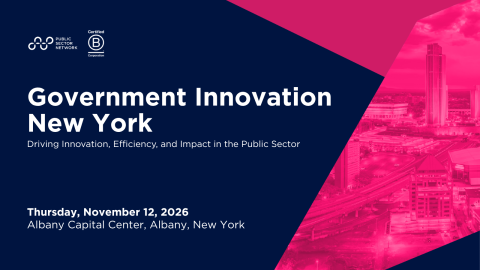
New York State is reimagining how government delivers services. With a historic $1.05 billion technology investment, the state is advancing infrastructure, embedding responsible AI, and strengthening cybersecurity to meet rising constituent expectations. From the new Empire AI Consortium to $90 million for IT upgrades, leaders are building toward integrated, anticipatory service models that reflect practical steps on the path to Government 3.0—delivering joined-up outcomes, stronger public trust, and measurable results for all New Yorkers. As 26% of the workforce retires by 2029, agencies are prioritizing next-generation talent with $56.5 million invested in upskilling and collaboration.
Government Innovation New York convenes senior public sector leaders in Albany to explore proven strategies, share what's working, and accelerate progress with confidence. The program features deep dives on responsible AI adoption, transparent procurement, and future-ready IT, with tracks covering Data & AI Modernization, Digital Services, public cloud security, and human-centered design. Attendees will gain actionable insights through keynotes by state leaders, interactive roundtables, and global perspectives—bridging strategy and implementation. Join fellow innovators for this complimentary full-day event to collaborate, exchange best practices, and leave equipped with frameworks you can apply immediately to shape New York's digital future.

Each year, SC provides the leading technical program for the HPC community. The Program is designed to share best practices in all areas of high performance computing. Become a contributor and share your excellence. Presenting at SC is extremely rewarding.
Here’s your opportunity to meet and interact with industry, research organizations, universities, and startups joining us from across the globe. As an exhibitor, showcase your cutting-edge technologies, products, and services to thousands of attendees.
The Students@SC program offers a broad range of volunteer experiences, cluster competitions, and networking opportunities. Put your professional development into overdrive and identify the possibilities within the field of high performance computing.
Industry, academia, and government experts volunteer to design, build, and administer the cutting-edge SCinet infrastructure, providing internet connectivity for attendees and pushing the boundaries of network innovation through research and demos.

The Texas IT Leadership Forum is where tomorrow’s government leaders grow today.
This invitation-only gathering brings together state and local IT executives, emerging leaders, and visionary thinkers for candid conversations on the future of public-sector technology. Focused on leadership development, innovation, and strategy, the Forum goes beyond the tech to address the people, policies, and practices shaping digital government. Through peer exchange and practical sessions, participants gain the insights, relationships, and skills needed to lead their organizations and communities into the future.
The Florida IT Leadership Forum is where tomorrow’s government leaders grow today.
This invitation-only gathering brings together state and local IT executives, emerging leaders, and visionary thinkers for candid conversations on the future of public-sector technology. Focused on leadership development, innovation, and strategy, the Forum goes beyond the tech to address the people, policies, and practices shaping digital government. Through peer exchange and practical sessions, participants gain the insights, relationships, and skills needed to lead their organizations and communities into the future.
For more information or to request an invitation, please contact Jennifer Caldwell.

With assistance from the U.S. Army Cyber Center of Excellence, Augusta University, and industry, this three-day conference is designed to open the lines of communication between the military and commercial sector and provide a space where government, academia, and industry professionals can discuss issues and share solutions surrounding cyber electromagnetic activities and unified land operations.
With a focus on enhanced warfighting outcomes, TechNet Augusta 2027 will explore how to accelerate the delivery of innovative and interoperable systems, which are crucial for decisive action in joint operational environments. We will deepen the military and private sector partnerships required to deliver advanced C2 and counter-C2 capabilities to our warfighters with unprecedented speed and efficiency.