Carahsoft Technology Corp.
Carahsoft has built our reputation as a customer-centric organization dedicated to serving the needs of our technology manufacturers, government end users, and reseller ecosystem with Solutions for Government. We have a proven history of helping government agencies find the best possible technology solution at the best possible value. Each customer works directly with a dedicated account representative to determine a solution tailored specifically to meet his or her needs. We combine our extensive knowledge of the technologies we provide, with a thorough understanding of the government procurement process, to analyze needs, provide configuration support, simplify the ordering process, and offer special government pricing.

Upcoming Carahsoft Technology Corp. Events
Fortra and Carahsoft are bringing the full offensive cyber lifecycle into one room – for the federal and DoW operators and leaders building it day-to-day.
Here's what you can expect at this event:
- Morning Session: A candid leadership session on building, sustaining, and measuring offensive cyber capability across federal civilian, DoW, and IC mission sets. Featuring Fortra leadership and the Outflank and Zero-Point teams.
- Afternoon Session: Hands-on labs in Core Impact, Cobalt Strike, and Outflank OST. Bring your laptop. Operator-to-operator. No vendor pitch.
Attendance is limited to 50 verified .gov and .mil participants!
As AI adoption accelerates across industries, organizations face growing pressure to govern AI responsibly — but many do not know where to start. The NIST AI Risk Management Framework (AI RMF) provides a structured, voluntary approach to identifying, assessing and mitigating AI risks across the full system lifecycle.
In this webinar, Shaw Data Security and ServiceNow will break down the AI RMF and demonstrate how the ServiceNow platform helps organizations operationalize AI governance at scale, turning framework compliance into a repeatable, automated workflow.
What You Will Learn:
- What the NIST AI RMF is, why it matters and how it applies to your organization today
- How ServiceNow’s AI Control Tower enables centralized visibility and policy enforcement across AI models and use cases
- How Integrated Risk Management (IRM) in ServiceNow maps directly to the NIST AI RMF core functions: Govern, Map, Measure and Manage
- Real-world steps to begin your AI governance program and reduce risk exposure from employee and third-party AI use
The facilities management industry is facing a workforce crisis. IFMA estimates that 40% of existing facilities managers will retire by 2026, triggering labor shortages of more than 150,000 positions through the end of this decade. Most universities aren't producing graduates equipped to fill them.
Northern Arizona University (NAU) took a different approach. Working with Willow and Microsoft, NAU embedded Operational AI directly into senior capstone curricula, giving students hands-on experience with real campus infrastructure. One team built a mobile app using Willow's live building data to drive energy competition across dorms. Another built a peak demand forecasting model to help the campus hit its carbon-neutral-by-2030 goal. Both projects are advancing: one is competing for EU green funding, and faculty interest has grown from the department level to the dean's office.
Join our complimentary webinar to hear directly from NAU’s former CIO, faculty leads and students to learn what worked, what the data showed and how other institutions can replicate their model, including the curriculum integration, procurement path and data access frameworks.
Attendees will learn:
- How to build a replicable model for workforce development
- How Operational AI addresses the skills gap, not just the technology gap
- How CIOs and facilities leaders can build internal support from department chairs to deans and why the promotional value to the institution is as strong as the operational value
- How Willow is expanding this model to other campuses and what early-stage institutions need to participate
Foreign adversaries are exploiting hidden dependencies in the software and artificial intelligence (AI) systems powering U.S. government and Defense Industrial Base (DIB) operations. From open-source components with ties to adversarial nations to AI models with opaque provenance, the threat is embedded, persistent and growing.
Join Manifest Cyber and Carahsoft on their upcoming webinar where you will learn how defense and government organizations can take an authoritative, automated approach to foreign risk, gaining complete visibility into what is running across mission systems before it becomes a liability.
- Identify software components and AI models with ties to foreign adversarial contributors, suppliers or training data.
- Enforce policy controls that classify and restrict high-risk components based on provenance and geographic origin.
- Maintain continuous, asset-level inventories across platforms, fleets and contractor-delivered systems.
- Accelerate authorization to operate (ATO) with audit-ready evidence and persistent risk monitoring.
CMMC Phase 2 requires DIB organizations to prepare for mandatory Level 2 assessments and ongoing compliance efforts.
Join Qmulos Product Leaders for a live webinar showcasing Q-TRP and its agentic approach to compliance. Attendees will see how Q-TRP observes real telemetry, maps activity to CMMC controls and produces assessor-ready evidence with a complete audit trail.
The session will also cover the Qmulos Early Access cohort and upcoming pilot opportunities.
- What separates agentic AI from traditional automation and how to maintain human oversight across multi-step workflows
- How leading government teams are developing full agentic lifecycles by moving from prototype experimentation into production
- How to promote agentic AI success through traceability, reproducibility, policy-based controls and continuous monitorization by agents.
Whether you're just starting out or you're an experienced user, this webinar is designed to help you create models faster, more effectively and with greater confidence.
During this session, we’ll share tried-and-tested techniques to streamline your workflow and build models more efficiently. You’ll learn how to take advantage of SketchUp’s ecosystem, exploring tools and features that simplify complex processes and save you time.
What attendees will learn:
- Using a 2D drawing to create 3D geometry in SketchUp
- The benefits of using grouping and components
- Extensions and SketchUp
- Creating plans in LayOut
- Creating renders in VRay
As organizations rapidly adopt AI, they face a growing challenge: how to innovate with confidence while maintaining control over risk, compliance and governance. Regulatory expectations are evolving quickly, internal oversight is fragmented and traditional GRC processes are struggling to keep pace.
Join Archer and Carahsoft for an in-depth discussion on how leading organizations are approaching AI governance and how they can operationalize it across the enterprise.
In this session, we will explore how Archer Evolv, an AI-native GRC platform, enables organizations to move beyond static compliance processes and into continuous, governed action. Archer Evolv connects regulatory intelligence to obligations, controls, policies and audit evidence, providing full traceability from source to outcome.
Attendees will learn how to:
- Establish a scalable AI governance framework aligned to emerging regulations and internal policies.
- Automate the translation of regulatory change into actionable controls and workflows.
- Leverage AI-powered analytics to identify risks, gaps and control weaknesses early.
- Maintain audit-ready documentation and lineage across the compliance lifecycle.
- Balance innovation and oversight through explainable AI, human-in-the-loop review and traceable controls.
This session will provide practical insights into how to operationalize AI governance at scale.

- Identify the most common barriers preventing AI pilots from reaching production and understand how gaps in data trust, governance and operational controls contribute to these challenges.
- Understand five critical structural shifts for running AI responsibly at scale, including how agencies can support transparency, accountability and compliance while accelerating value.
- Apply a practical architecture mindset and a 90-day path forward using real-world government scenarios such as policy interpretation, compliance review, case summarization and citizen service automation.

Workforce strategy is more critical than ever for public sector organizations to meet evolving demands, attract top talent, and foster a resilient workforce. Join us for our monthly demos, where we’ll showcase how LinkedIn’s innovative solutions can address your HR challenges—whether it’s talent acquisition, upskilling your team, or enhancing employee engagement. Discover how LinkedIn can empower your organization to:
Don’t miss this opportunity to revolutionize your approach to workforce strategy in public service! |
Geopolitical uncertainty continues to shape the global business environment, creating new challenges and oportunities for organizations operating across international markets. During RANE's 2026 Second Quarter Forecast Briefing, analysts will provide a focused outlook on the geopolitical developments and security trends most likely to impact business operations in the months ahead.
For this session RANE is extending access to a limited number of non-clients. Submit your request to attend and a RANE representative will contact you to confirm.
In this webinar, you'll learn:
- How shifting U.S. policies toward Cuba and Venezuela may reshape political and economic dynamics across the Western Hemisphere
- How continued USMCA negotiations and broader trade discussions could sustain uncertainty for businesses despite ongoing engagement
- What to expect from U.S.-China relations as diplomatic progress is tempered by elections, military activity and tensions surrounding Taiwan
- The potential impact of Iran-linked disruptions on inflation, civil unrest in Africa and evolving relationships among key Middle Eastern powers
- Why the U.S. is expected to avoid a prolonged conflict with Iran and how ongoing Iranian activity may continue to influence policy decisions through 2026
Government organizations at every level — federal agencies, DoD components and state and local entities — face data protection requirements that most commercial backup platforms cannot meet: air-gap and compliance mandates (FedRAMP, FISMA, CMMC, StateRAMP, CJIS), petabyte-scale HPC workloads, ransomware resilience for critical public-sector systems and predictable costs that capacity-based pricing destroys.
In this webinar, Rick Stevens, President of Bacula Systems, will walk through the backup and data protection challenges facing four critical verticals — HPC and national laboratories, federal government, defense and the intelligence community and healthcare — and show how a single open-architecture platform addresses each.
Don't miss this opportunity to discover what best-in-class public-sector data protection looks like.
State and local Governments are working to deliver more reliable, accessible and measurable digital services while improving resident experiences.
Join Datadog and Carahsoft on Wednesday, July 15, 2026, at 1:00 PM PT for Transforming CX and Service Delivery in State Government Operations. Using Washington State EO 25-06 as a real-world example, this webinar will explore how agencies can improve digital service delivery, measure CX outcomes and gain end-to-end visibility into resident-facing services.
What You'll Learn:
- How mandates like Washington State EO 25-06 are shaping digital service priorities
- Ways to measure digital performance and CX across agencies
- Best practices for improving accessibility, reliability and service outcomes
- How observability supports modernization and end-to-end visibility
All registrants will receive Datadog's Washington State Solution Brief, featuring a real-world example of Washington's digital-first transformation.
Constituent expectations are changing faster than most organizations realize. The competition isn't just other museums or performing arts centers - it's the convenience of on-demand entertainment and streaming that keeps people home. Today's audiences expect personalized, timely engagement, and modern CRM, ticketing, and AI-powered tools are making that possible in ways that weren't available even a few years ago.
Attendees will learn:
- Why cultural organizations are moving off legacy all-in-one platforms, and why staying put is becoming the bigger risk.
- What it means to have best-in-class technology that not only connects your internal teams but helps you meet constituents where they are, with the personalized engagement patrons expect.
- How to know if your organization is ready, and what to do first if you are.
Events We Are Sponsoring
The cloud, hybrid IT, and GenAI are reshaping the IT landscape, but they also are expanding attack surfaces and increasing cyber risk. Security tools already in place are falling behind, unable to keep up with new threats that have been supercharged by AI tools being used by bad actors, from criminals to hostile nation-states.
Rather than focusing solely on stopping attacks, using Zero Trust (ZT) segmentation tools provide a new line of defenses – east-west traffic visibility, microsegmentation, identity-based firewalling, and east-west traffic encryption in transit. By minimizing the impact of inevitable breaches through effective containment, agencies can maintain uptime during attacks and keep essential government services running.
Learning Objectives:
- Outline the resources you have in place to protect the most precious assets in your systems and whether they can provide visibility into traffic, encryption for lateral traffic, and use ZT policies to control access
- Evaluate the time and costs associated with existing security measures and action plans to recover from a breach to establish metrics for improvement, such as time-to-response, manpower costs, system downtime
- Delineate locations within your systems where microsegmentation and strict ZT enforcement provide the greatest protection from lateral penetration
Federal grants management has always been a complicated process. The Government Accountability Office (GAO) found in a newly-released report that “[w]hile there are certain standard requirements, each grant program has different authorizing legislation and may also be subject to agency-specific regulations and guidance. For some aspects of grant design and administration, agencies also have more discretion to make decisions.”
As a result, the design and administration of grant programs across federal agencies vary substantially, creating friction at every step and making compliance by grantees an intense, often unmanageable process. Many participating organizations designate a CFO to manage them; many mid-sized and smaller companies, without the financial resources or manpower to manage them, don’t attempt to apply because of the burden.
Learning Objectives:
- Identify the points of friction in your agency’s grants administration processes
- Evaluate the grantee applicant pool from which your agency makes awards to determine how to make it broader and deeper
- Delineate where in the grant application process and the administration process technology can be used to mitigate or eliminate chokepoints
AI is rapidly transforming our world—from scientific discovery to business operations to national defense. At the same time, quantum computing is advancing toward a new era of computational power. As these technologies converge, they will significantly amplify one another’s capabilities, creating unprecedented opportunities as well as significant new security challenges.
This changing landscape requires such measures as deploying quantum-resistant security to safeguard data, AI models, and communications as quantum computers begin to challenge current cryptographic standards. Using AI can strengthen cybersecurity solutions through improved threat detection, accelerated incident response, and are resilient security architectures.
Learning Objectives:
- Learn how to counter the malicious use of AI by hostile state actors, extremist groups, and criminals in the face of quantum resources that accelerate model development and attack automation
- Identify how adversarial attacks on AI systems can exploit model weaknesses and ways quantum-enhanced methods may increase their sophistication
- Review your agency’s systems and datasets to locate and prioritize security vulnerabilities that need to be addressed

The Irregular Warfare Initiative (IWI) and the Special Operations Association of America (SOAA) will host a two-day conference at Carahsoft Headquarters in Reston, Virginia, focused on the role of critical minerals and rare earth elements in strategic competition. As demand for these resources grows across defense, energy, and advanced technologies, control of supply chains has become a central factor in national security and irregular competition.
Bringing together 400–600 leaders from government, industry, academia, and the national security community, the conference will examine how strategic resources are used as instruments of leverage, denial, and influence. Day one will focus on supply chain vulnerabilities, economic statecraft, and gray-zone dynamics, while day two shifts to forward-looking solutions and emerging approaches to strengthening resilience. The event will also include an invitation-only working group and tabletop exercise (TTX), convening senior stakeholders to explore how to compete and shape outcomes in contested resource environments.
Who Should Attend
- U.S. government and interagency professionals
- Military and special operations leaders
- Industry stakeholders across critical minerals, supply chains, and infrastructure
- Investors and financial leaders in strategic resources
- Academia, think tanks, and national security analysts
- Journalists covering defense and global competition
Agencies are exploring how AI can improve decision-making, streamline operations, and enhance service delivery — all while navigating real constraints around data, governance, and workforce readiness.
The result? A growing set of lessons about what it actually takes to move AI from experimentation to real impact.
Join us online Wednesday, July 22 at 12 p.m. ET/9 a.m. PT for a virtual summit focused on real-world insights from agencies working to realize the potential of AI — and how leaders are turning those insights into measurable outcomes.
Specifically, you'll learn:
- How agencies are moving AI efforts from pilots to production.
- Common challenges around data, governance, and workforce, and how teams are addressing them.
- Real examples of AI improving mission outcomes and service delivery.
- Practical lessons for scaling AI in a responsible, sustainable way.
Government legal departments, at the state, provincial, and local levels across US and Canada, have shown interest but slow adoption in leveraging legal AI. Meanwhile private sector law firms are rapidly integrating AI in all areas of their business and practice.
Not only is this going to impact legal work within government departments, but it’s also going to impact job satisfaction and hiring as the work experience for attorneys widens between the private and public sector. Public sector legal professionals… greater responsiveness and measurable outcomes, but without given the tools to support this.
In addition to implementing AI, government departments are looking for ways to centralize case management. From matter intake and case management to document review, court scheduling, and secure communications, the right case management tools can securely coordinate agency data. Robust time-tracking and resource reporting allows agencies to justify budgets and track the efficiency of public spend. Integrated legal AI supports critical decision-making and accelerates routine analysis. This allows staff to focus on substantive legal work rather than administrative data entry, while maintaining rigorous standards for data accuracy.
Learning Objectives:
- Identify the obstacles and constriction points for the case management flow in your offices
- Evaluate how those constrictions affect staff utilization, output, and budget
- Understand how AI can enhance your departments legal work in a secure and compliant way

Jul 22, 2026
Virtual / Online
The SANS Government Forum 2026, presented in partnership with Carahsoft, brings together Federal, State and Local cybersecurity leaders to address today’s most pressing security challenges. This forum is designed to help agencies strengthen mission readiness, modernize infrastructure, and improve cyber resilience through expert-led insights and real-world strategies.
Key Focus Areas
- AI and Agentic AI
- Explore how AI-driven and autonomous systems are transforming threat detection, response and decision-making
- Learn how agencies can safely operationalize AI to enhance security outcomes
- Critical Infrastructure: IT/OT
- Address the convergence of IT and operational technology environments
- Gain strategies to defend essential services against ransomware and nation-state threats
- Zero Trust and Identity Security
- Understand identity-first security architectures for hybrid and cloud environments
- Learn how to enforce least privilege and reduce identity-based risk
- Exposure Management: Threat and Attack Surface
- Discover approaches to continuously identify, prioritize and reduce cyber risk
- Improve visibility across expanding attack surfaces and complex ecosystems
Why Attend
- Gain actionable, practitioner-led insights from SANS experts and industry leaders
- Engage in real-world discussions around current government cybersecurity challenges
- Identify proven solutions to accelerate secure adoption of emerging technologies
- Walk away with strategies to defend today’s missions and prepare for evolving threats

City and county governments across the country are facing tighter budgets. Accompanying the financial pressures, these smaller government entities are facing rising service demands and trying to cope with chronic staffing shortages. In this turbulent landscape, agentic AI offers a way to improve services, cut legacy IT debt, and provide assistance to overwhelmed employees.
Counties and cities already use AI to improve public safety, optimize urban planning and transportation, and streamline internal operations. Using pilot programs, they can experiment with AI-generated public agents to identify constituent-facing solutions and scale them as needed.
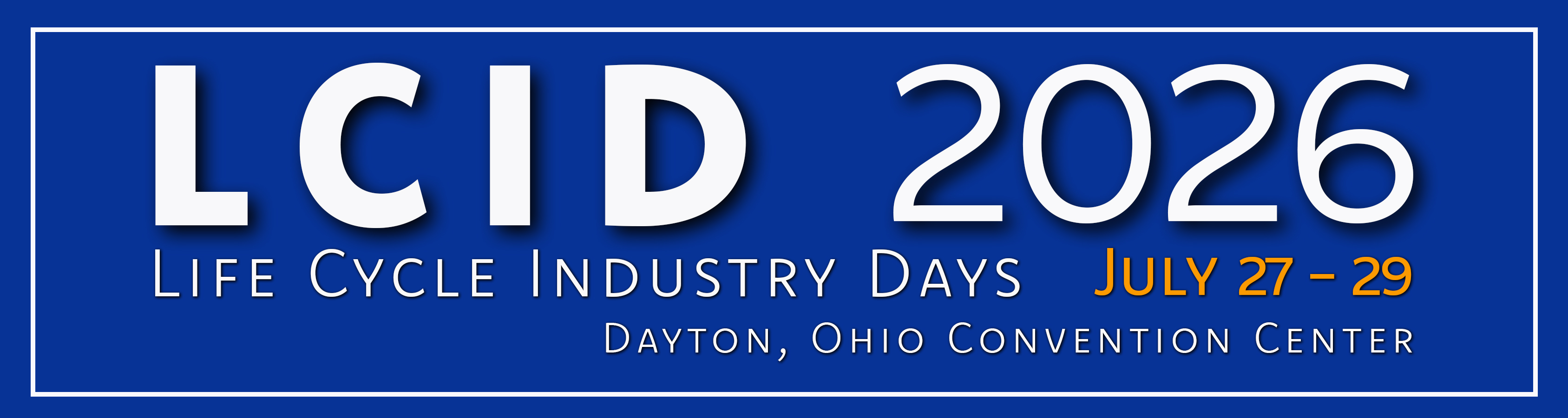
This is your prime opportunity to engage directly with Air Force leaders, industry innovators, and fellow Airmen. LCID is where partnerships are forged and the future of the enterprise is shaped. You'll gain exclusive insights from senior leaders and experience the next generation of aerospace technology at our dynamic industry expo.

The Los Angeles Digital Government Summit is where innovation meets impact!
Bringing together the brightest minds in state and local government, this summit empowers public-sector leaders to explore cutting-edge technologies, modernize operations, and solve pressing challenges. From cybersecurity and AI to data governance and digital service delivery, sessions are designed to spark insight, foster collaboration, and accelerate real-world results. Whether you're shaping strategy or implementing solutions, the Summit delivers valuable peer connections and actionable guidance to help move your mission forward.
Open to Public Sector only.

In the seven years since the establishment of the U.S. Space Force, the Department of Defense has worked to prioritize space as a domain with as much weight and consequence as its other principle areas of responsibility. The Potomac Officers Club’s 2026 Air and Space Summit is paying tribute to this with the inclusion of USSF alongside the U.S. Air Force for its latest GovCon conference. Top leaders from both service branches will participate in engrossing dialog with industry’s finest executives for a packed day of keynote addresses, panel conversations and non-stop networking.
Sessions will explore how to bring in advanced technologies to stay ahead in the air and space domains and the strategies leaders are devising to combat new, ever-growing challenges.
Public sector organizations are operating in an increasingly complex environment shaped by evolving cyber threats, aging infrastructure, workforce shortages and growing expectations for modern digital services.
AI-driven attacks are expanding the threat landscape while legacy systems and fragmented data make it harder for agencies and institutions to respond quickly. At the same time, constituents, staff and students expect faster, more intuitive services similar to what they experience in the private sector.
To keep pace, government and education organizations are modernizing IT operations, strengthening endpoint security and adopting automation and AI to improve both cybersecurity and service delivery.
The Ivanti Public Sector Summit brings together leaders from federal, defense, state and local government, education and industry to discuss practical strategies for securing endpoints, modernizing IT service management and delivering trusted digital services.
Learning Objectives:
- Explain how modernization initiatives help agencies address evolving cybersecurity threats.
- Evaluate strategies for improving coordination between IT and security teams.
- Identify best practices for securing communications in classified and tactical environments.
- Describe key outcomes of effective vulnerability and patch management programs.
- Assess how AI and automation can improve IT service management and service delivery.

The National Homeland Security Conference brings together professionals in Homeland Security, Law Enforcement, Fire and Emergency Management. They include officials in federal agencies, nonprofit agencies, business owners, universities and decision makers who attend to learn about emerging trends in homeland security and see the new equipment and technology available to support their mission. Last year's conference was ground breaking for exhibitors and attendees. #NHSC2026 at the Kentucky International Convention Center promises to deliver another record breaking experience. The early bird registration rate is $700. After May 29th, the rate is $775! Registration closes on July 10th.
As agencies move to implement AI throughout their organizations, most are finding their AI efforts disrupted by fragmented, low-quality, or inaccessible data. This is a problem government shares with the private sector – a recent survey found that 79% of respondents said their AI initiatives are being hindered by limited access to data across environments.
These are not new problems for the government. There are still issues with data fragmentation and silos, poor data quality, complexities in applying governance and security requirements, and technical debt – legacy systems aren’t designed for modern analytics needs. And. of course, the pace of data generation continues to accelerate, adding to the pressure to clean and restructure massive numbers of datasets. That recent survey found that 60% of AI projects may be abandoned due to poor data readiness.
Learning Objectives:
- Outline the particular challenges in data readiness faced by your agency
- Delineate the steps to address those challenges, including prioritization and resource allocation
- Establish metrics to measure improvements in data quality so your agency datasets can be used by AI tools to produce trusted solutions

Events Where We Are Exhibiting
The Los Angeles Digital Government Summit is where innovation meets impact!
Bringing together the brightest minds in state and local government, this summit empowers public-sector leaders to explore cutting-edge technologies, modernize operations, and solve pressing challenges. From cybersecurity and AI to data governance and digital service delivery, sessions are designed to spark insight, foster collaboration, and accelerate real-world results. Whether you're shaping strategy or implementing solutions, the Summit delivers valuable peer connections and actionable guidance to help move your mission forward.
Open to Public Sector only.
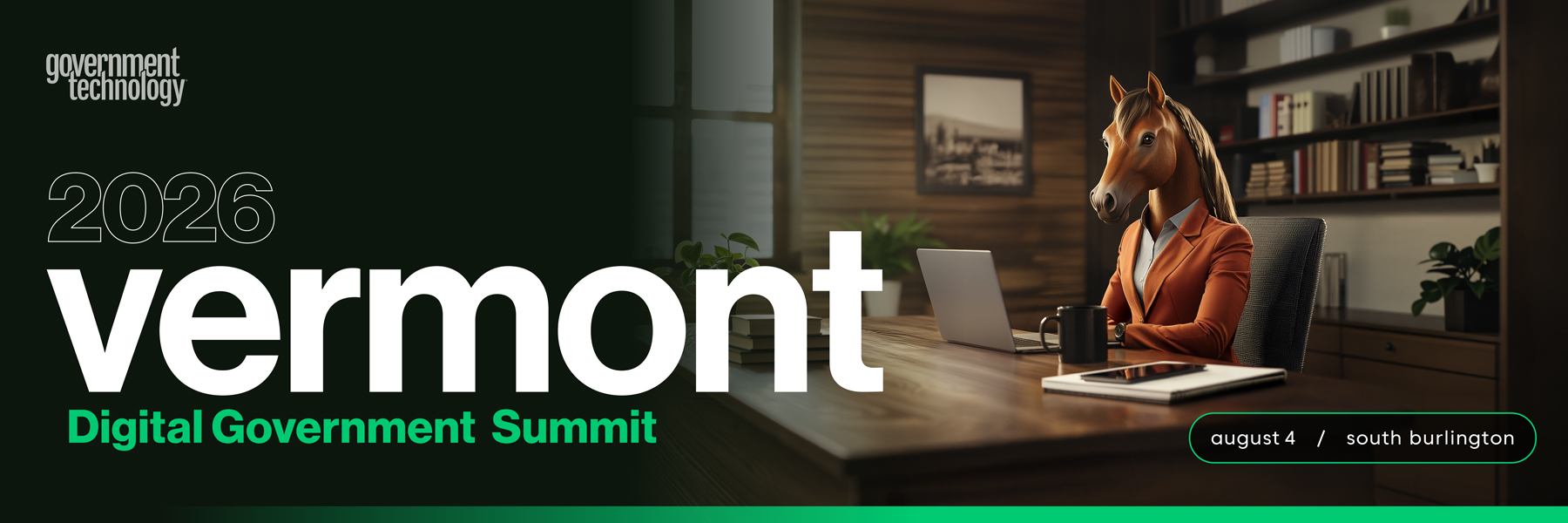
The Vermont Digital Government Summit is where innovation meets impact!
Bringing together the brightest minds in state and local government, this summit empowers public-sector leaders to explore cutting-edge technologies, modernize operations, and solve pressing challenges. From cybersecurity and AI to data governance and digital service delivery, sessions are designed to spark insight, foster collaboration, and accelerate real-world results. Whether you're shaping strategy or implementing solutions, the Summit delivers valuable peer connections and actionable guidance to help move your mission forward.
Open to Public Sector only.

Registration is not yet available. Check back in the Spring of 2026.
TechNet Augusta 2026 gives participants the opportunity to examine and explore the intricacies of the cyber domain. With assistance from the U.S. Army Cyber Center of Excellence and industry experts, the conference is designed to open the lines of communication and facilitate networking, education and problem solving. Leaders and operators also discuss procurement challenges the military, government and industry face during a time of uncertain budgets and runaway technology advances.
With assistance from the U.S. Army Cyber Center of Excellence and industry, this three-day conference is designed to open the lines of communication between the military and commercial sector and provide a space where government and industry professionals can discuss issues and share solutions surrounding cyber electromagnetic activities and unified land operations.
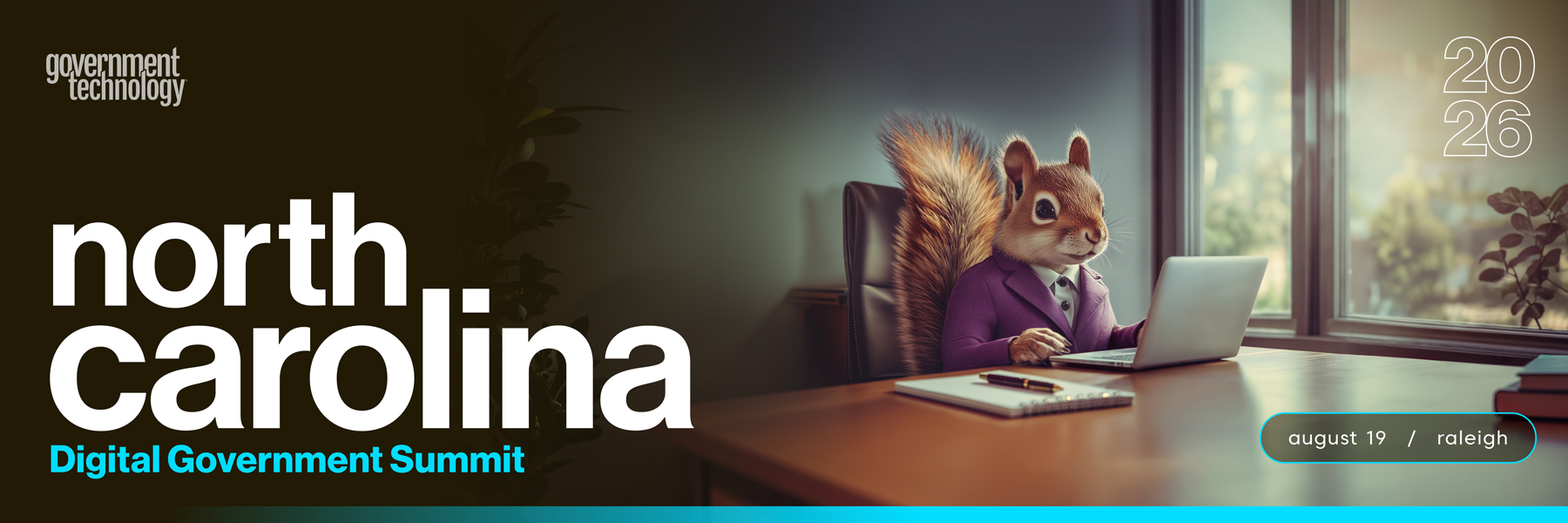
The North Carolina Digital Government Summit is where innovation meets impact!
Bringing together the brightest minds in state and local government, this summit empowers public-sector leaders to explore cutting-edge technologies, modernize operations, and solve pressing challenges. From cybersecurity and AI to data governance and digital service delivery, sessions are designed to spark insight, foster collaboration, and accelerate real-world results. Whether you're shaping strategy or implementing solutions, the Summit delivers valuable peer connections and actionable guidance to help move your mission forward.

The California Government Innovation Summit is where innovation meets impact!
Bringing together the brightest minds in state and local government, this summit empowers public-sector leaders to explore cutting-edge technologies, modernize operations, and solve pressing challenges. From cybersecurity and AI to data governance and digital service delivery, sessions are designed to spark insight, foster collaboration, and accelerate real-world results. Whether you're shaping strategy or implementing solutions, the Summit delivers valuable peer connections and actionable guidance to help move your mission forward.

Co-hosted by AFCEA and INSA, the nation’s leading non-profit associations dedicated to public-private partnerships, the summit will bring together 2,200 leaders from government, academia, start-ups, and the defense industrial base for two days of technology-driven, mission-focused discussions.
Your registration and sponsorship don't just underwrite an event, they strengthen our mission and support the community we serve.
From a career fair and thought-provoking plenaries to breakout sessions, cutting-edge exhibits, and unmatched networking, the Summit is where connections spark ideas and partnerships that last. Registration opening Spring 2026!
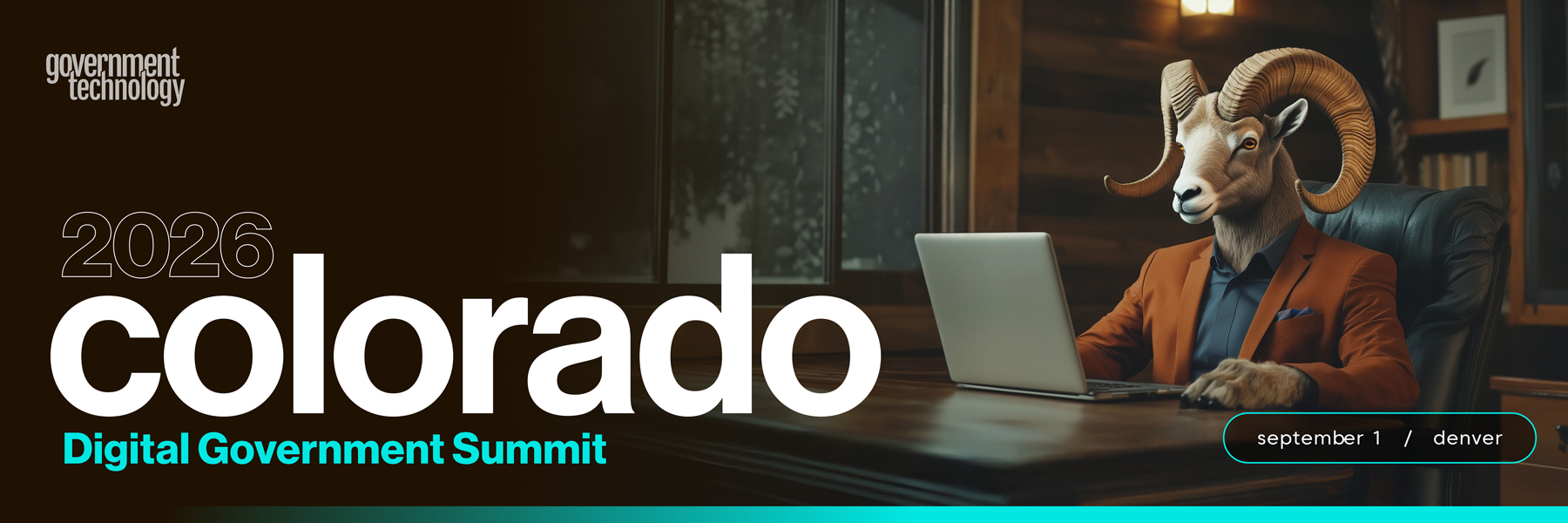
The Colorado Digital Government Summit is where innovation meets impact!
Bringing together the brightest minds in state and local government, this summit empowers public-sector leaders to explore cutting-edge technologies, modernize operations, and solve pressing challenges. From cybersecurity and AI to data governance and digital service delivery, sessions are designed to spark insight, foster collaboration, and accelerate real-world results. Whether you're shaping strategy or implementing solutions, the Summit delivers valuable peer connections and actionable guidance to help move your mission forward.
Open to Public Sector only.
The Connecticut Digital Government Summit is where innovation meets impact!
Bringing together the brightest minds in state and local government, this summit empowers public-sector leaders to explore cutting-edge technologies, modernize operations, and solve pressing challenges. From cybersecurity and AI to data governance and digital service delivery, sessions are designed to spark insight, foster collaboration, and accelerate real-world results. Whether you're shaping strategy or implementing solutions, the Summit delivers valuable peer connections and actionable guidance to help move your mission forward.
Open to Public Sector only.
The Florida Public Sector Cybersecurity Summit is where government defends the future.
This public sector-focused event brings together IT security leaders, risk managers, and public officials to tackle the evolving cyber threats facing state and local government. Through expert-led sessions, peer exchange, and real-world case studies, attendees gain practical strategies to strengthen cyber resilience, protect critical infrastructure, and lead with confidence in an age of constant risk. Designed specifically for the public sector, this summit delivers insights you can act on and alliances you can trust!
The TribalNet Conference & Tradeshow is the annual gathering of the TribalHub community. It is not just another conference; it is an experience! This is one of the only events truly dedicated to Native American government, gaming, and health technology – with topics that are relevant to what is going on both nationally and locally. The attendees and vendors are open, engaged and ready to make valuable connections! In today’s world, it’s more essential than ever, for business leaders to utilize cutting-edge technologies and leadership strategies across all departments to create sustainable growth and success. The TribalNet Conference & Tradeshow is a great opportunity to take advantage of a growing network of resources, experience and industry connections, ensuring that enterprise and government leaders are in possession of the tools and information that they need to thrive in their industries.
What will you gain by attending?
- Valuable Connections with Vendor Partners and Industry Peers
- Opportunities for Collaboration with other Tribes
- Practical Tools for Business Growth
- Knowledge of the Latest Technology Tools and Resources
Each year, SC provides the leading technical program for the HPC community. The Program is designed to share best practices in all areas of high performance computing. Become a contributor and share your excellence. Presenting at SC is extremely rewarding.
Here’s your opportunity to meet and interact with industry, research organizations, universities, and startups joining us from across the globe. As an exhibitor, showcase your cutting-edge technologies, products, and services to thousands of attendees.
The Students@SC program offers a broad range of volunteer experiences, cluster competitions, and networking opportunities. Put your professional development into overdrive and identify the possibilities within the field of high performance computing.
Industry, academia, and government experts volunteer to design, build, and administer the cutting-edge SCinet infrastructure, providing internet connectivity for attendees and pushing the boundaries of network innovation through research and demos.
The Florida IT Leadership Forum is where tomorrow’s government leaders grow today.
This invitation-only gathering brings together state and local IT executives, emerging leaders, and visionary thinkers for candid conversations on the future of public-sector technology. Focused on leadership development, innovation, and strategy, the Forum goes beyond the tech to address the people, policies, and practices shaping digital government. Through peer exchange and practical sessions, participants gain the insights, relationships, and skills needed to lead their organizations and communities into the future.
For more information or to request an invitation, please contact Jennifer Caldwell.