
Code-a-thons and hack-a-thons have moved out of the basements of Silicon Valley and into ballrooms across the country. These events are usually one or two day intensive sessions where software developers work in teams to develop a technology solution to a stated challenge.
Recently, the Department of Health and Human Services (HHS) hosted one as part of their efforts around the national opioid crisis. The Opioid Symposium and Code-a-Thon allowed HHS to educate attendees on their five-part strategy for combatting opioid abuse. The event posed three challenge questions to programmers from private industry, academia, and government. From there, the 50 teams began designing solutions for the next 24 hours. Winners in each of the three tracks were selected the following day.[Tweet "New #GovEventsblog article: Adding Code-A-Thons to the Event Mix"]
While this in-person event was specific to a single government agency, the federal government as a whole has been hosting virtual code-a-thons since the launch of challenge.gov in 2010. This site allows federal agencies to submit a problem that needs a technical solution. Prize money is offered, and a time frame is given for the development of working code. Both individuals and companies are eligible to participate in solving complex, mission-centric problems. Continue reading

 This year GovEvents celebrates its eighth anniversary being the premier online resource for government and military events worldwide. GovEvents was created to provide a one-stop-shop for the government community to find the events that aid in their professional development, their organization's mission, and their business goals.
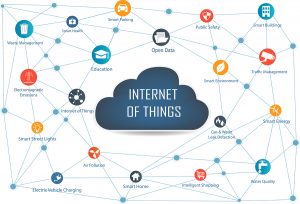 The Internet of Things, or IoT, is a system of interrelated devices that may have completely different uses, shapes, or sizes, but all have one thing in common-- data and the ability to transfer it autonomously. IoT can be the microchip that helps you find your lost dog, a monitor in a heart valve that alerts doctors and patients to irregular beats, a thermostat that you can turn on remotely, motion detectors that tell you when someone is approaching your door, and so much more. Building on these everyday applications, state, local, and federal agencies are finding ways to use IoT to better serve citizens.[Tweet "IoT was named one of the top subjects discussed at federally-focused events. #GovEventsBlog"]