


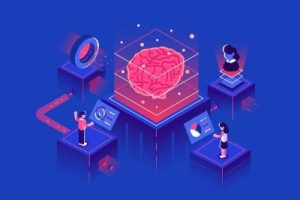
 Machine Learning (ML) and other aspects of Artificial Intelligence (AI) are becoming a critical part of government modernization plans. The fear that "machines will replace people" has largely disappeared. In fact, people see the benefit that ML provides for human workers. ML technology allows machines to do what they are best at - fast computation of large data sets - freeing up humans to do what they do best - analyzing and making sense of the data produced.
The new reality is that while machines will not replace people, those that refuse to adopt and adapt to AI-enabled tools may in fact find themselves replaced by other people that do. The proof is in the pudding. ML tools are helping government teams meet critical challenges of unemployment fraud, natural disasters, racial equity, and healthcare. Continue reading
 In an era where we're often asked to "do more with less," government is finding the need to do more with more when it comes to data. There is no lack of data within government systems. The challenge has always been getting the right access to it and then making it usable. Data can go a long way in helping meet key government-wide goals of better customer experience and increased equity in government service. There are a number of interesting applications of Big Data solutions across government to illustrate the power of data to make a difference.
 Agile is not a technology but rather
  Artificial Intelligence (AI) is becoming a key tool in the arsenal of the U.S. military. In 2022, the Department of Defense (DoD) launched the
  In-person events are back in force, but we're all a little rusty at networking. Anyone who has attended an in-person event recently has likely had the conversation with fellow attendees, "Wow, I'm not sure how to do this anymore." To help us all get back in our groove, we wanted to pull together a list of tried and true as well as some new tips to make your attendance at the next government networking event feel a bit more natural.
